What Not to Wear to an Interview: The Unfiltered Guide to First Impressions
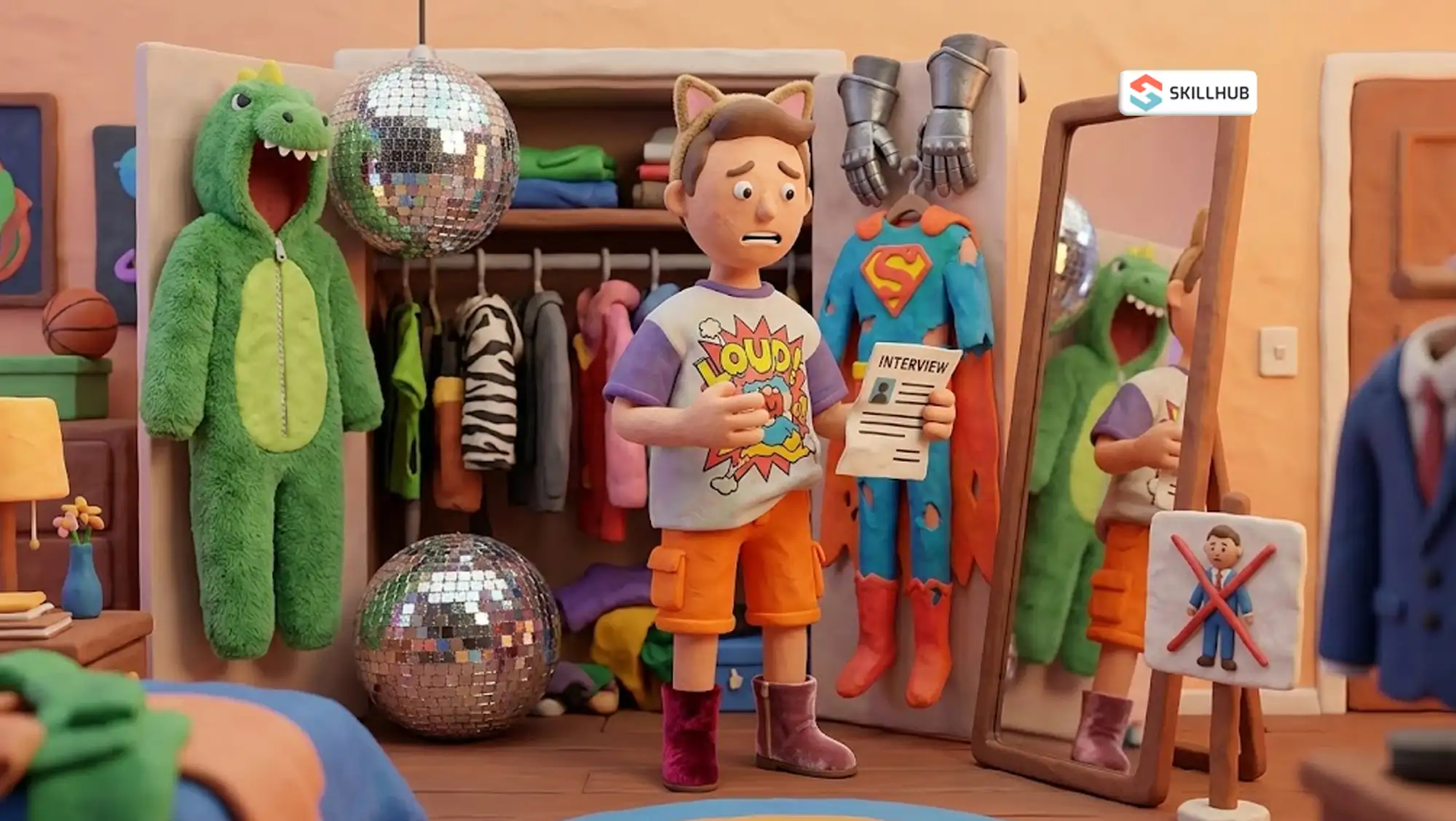
Human beings are deeply judgmental creatures. We do not like to admit it, but science proves it every single time.
When you walk into a room for an interview, the hiring manager forms a concrete opinion about your competence, your professionalism, and your situational awareness within the first seven seconds of seeing you. That happens before you even shake their hand. It happens before you open your mouth.
It happens purely based on what you are wearing.
You can spend weeks perfecting how to write a resume that brilliantly highlights your ten years of experience. But if you sit down across from a Director of Finance while wearing a wrinkled graphic t-shirt and smelling strongly of cheap cologne, your resume ceases to matter. The visual data overrode the written data.
Figuring out what not to wear to an interview is arguably more important than figuring out what to wear. An incredibly boring, average outfit will never cost you a job. A distractingly bad outfit absolutely will.
Here is the unfiltered truth about interview attire, the psychology of why hiring managers care, and the definitive ban list of what not to wear to a job interview.
The Psychology of Interview Clothes: It Isn't About Fashion
A lot of candidates get defensive about dress codes. They think, “I am a software engineer. My code is flawless. Why does it matter if I wear sweatpants to the interview?”
It matters because an interview outfit is a test of situational awareness.
The hiring manager does not care about your fashion sense. They care about your ability to read a room. If you cannot figure out the social norms of a high-stakes professional meeting, how can they trust you to read the room during a tense client negotiation? How can they trust you to represent the company at a trade show?
Dressing appropriately proves that you understand context. Dressing poorly proves that you either do not understand the rules, or you think you are above them. Neither is a trait employers want to hire.
The Universal Ban List: What Not to Wear at a Job Interview
Regardless of whether you are interviewing at a conservative law firm or a hyper-casual tech startup in Silicon Valley, there are hard lines you do not cross. Here is exactly what not to wear for a job interview.
1. The "Can I Wear Sandals to an Interview?" Debate
Let’s settle this immediately. I see this exact question pop up in career forums constantly: can I wear sandals to an interview?
No. Absolutely never.
It does not matter if it is 100 degrees outside. It does not matter if the office has a "casual beach vibe." Open-toed shoes, flip-flops, sliders, and sandals are universally banned from the interview room. The sound of flip-flops loudly smacking against your heel as you walk down a corporate hallway destroys any illusion of professionalism. Wear closed-toe shoes. Period.
2. The Distraction Factor (Flashy and Loud)
Your outfit should act as a blank canvas. The interviewer should be entirely focused on your face and your answers.
If you wear a neon-yellow shirt, massive dangling earrings that jingle every time you nod, or a tie with a comical cartoon pattern, you are creating visual noise. The interviewer will spend the entire hour staring at your loud accessories instead of listening to your brilliant examples of your soft skills in action.
Keep the colors muted. Navy, gray, black, white, and subtle earth tones are your best friends.
3. The "Club vs. Corporate" Crossover
When people search for what not to wear to an interview female or male, the most common trap is confusing "looking good" with "looking professional." They are two entirely different concepts.
If an outfit would look amazing at a nightclub, a cocktail lounge, or a casual Sunday brunch, it is likely the exact wrong choice for an interview.
- For men: This means no deep V-neck shirts, no excessively tight pants, and no hats of any kind (beanies, baseball caps, fedoras—leave them all at home).
- For women: This means avoiding plunging necklines, sheer fabrics, and skirts that require constant pulling down when you sit in a chair.
You want the interviewer to remember your brain, not your body.
4. The Cologne and Perfume Cloud
This is the silent killer of job interviews. You cannot see it, but it will ruin you.
Interview rooms are often small, poorly ventilated glass boxes. If you douse yourself in heavy perfume or cologne right before walking in, you are going to trap the hiring manager in a cloud of artificial scent. I have personally seen interviewers cut meetings 20 minutes short simply because a candidate's cologne was giving them a migraine.
Do not wear any fragrance to an interview. Freshly showered with mild deodorant is the only acceptable scent.
%20(1).png)
The "Plus-One" Rule of Dressing (How to Avoid Overdressing)
Most people assume the safest bet is to wear a full, tailored suit to every interview. That used to be true in 1995. It is no longer true today.
In modern corporate culture, overdressing can actually be a red flag. If you show up to a scrappy, 10-person tech startup wearing a three-piece pinstripe suit, you look completely out of touch. You look like you belong in a banking movie, not their casual co-working space. You instantly signal a lack of cultural fit.
So, how do you find the balance? You use The Plus-One Rule.
Find out the daily dress code of the company you are interviewing with. Then, dress exactly one level nicer than that.
- If the employees wear t-shirts and jeans (Level 1), you wear dark, neat jeans and a collared shirt or blouse (Level 2).
- If the employees wear business casual like khakis and polos (Level 2), you wear dress pants and a blazer (Level 3).
- If the employees wear suits (Level 3), you wear your absolute best, most tailored suit (Level 4).
By using the Plus-One Rule, you show respect for the occasion without looking like an alien who doesn't understand the company culture.
The Zoom Interview Illusion
Remote work has created a completely new category of what not to wear to a interview. Because the camera only shows you from the chest up, candidates get incredibly lazy.
They wear a crisp dress shirt on top, and pajama pants on the bottom.
Do not play this game. Wear the full outfit, including the pants and the shoes, even if you are sitting in your own bedroom. Why? Because of psychology. Putting on a full professional outfit physically changes your posture and your mindset. You speak more clearly. You sit up straighter.
Plus, if you suddenly need to stand up to grab a charger or close a door because a dog started barking, you will not accidentally expose your fuzzy pajama bottoms to the VP of Marketing.
The Bottom Line
When you are preparing for the big day, you need to spend 95% of your energy rehearsing your answers. You need to know exactly how to articulate your value, and you need to have a flawless answer ready when they inevitably ask what are your greatest strengths.
Do not let a bad outfit distract from all that hard work.
Clothes do not get you the job, but the wrong clothes will absolutely lose it for you. Keep it clean, keep it muted, and keep it contextually appropriate. Once you master the visual first impression, the rest comes down to your expertise. Nail the interview, secure the offer, confidently navigate your salary negotiation to get the compensation you deserve, and prepare to quit your job professionally.
Leave the sandals at the beach. Go get the job.


%20(1).webp)