How to Politely Decline an Interview (Without Burning Bridges)
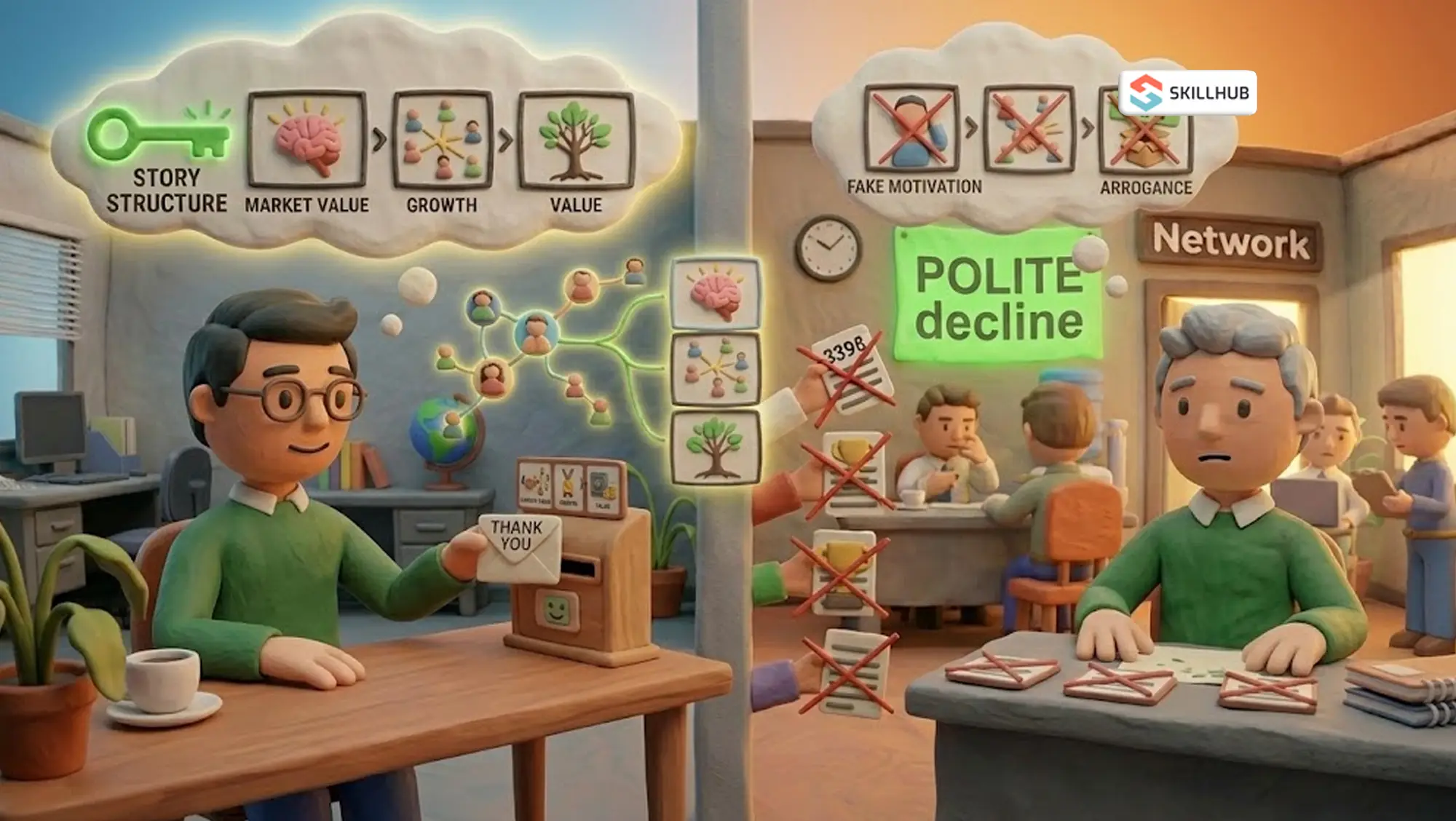
You open your inbox and see the email you were waiting for. A recruiter wants to schedule a formal interview with you for next Tuesday.
A week ago, you would have been thrilled. But today, the situation has changed. Maybe you just signed an offer letter with a competitor. Maybe you realized the commute is an absolute nightmare. Maybe you had a brief phone screen with the hiring manager and immediately spotted massive, glaring red flags in the company culture.
Whatever the reason, you do not want the job anymore.
Your immediate, anxiety-driven instinct is to simply ignore the email. Delete it. Pretend it went to spam. You figure that if you just ghost the recruiter, they will eventually get the hint and go away.
Do not do this.
Ignoring a recruiter is a massive, amateur mistake that can haunt your career for years. Figuring out how to politely decline an interview is a critical professional skill. Industries are much smaller than you think, and the recruiter you ghost today might be the hiring manager at your dream company five years from now.
Here is the unfiltered truth about why you must formally reject the opportunity, how to say no to an interview without sounding arrogant, and the exact email templates you need to close the loop while keeping your reputation spotless.
Why You Must Send an Interview Decline Email
Let's look at this from the recruiter's perspective. Many companies today rely on an ai recruiter to streamline candidate screening, track applications, and manage communication efficiently.
Finding a good candidate is exhausting. They spent hours sifting through terrible applications before they found yours. They pitched your profile to the hiring manager. They got approval to move you to the next round. They are actively invested in you.
When you suddenly disappear, you do not just inconvenience them; you actively mess up their workflow. They have to keep your file open. They have to send you follow-up emails. They look bad in front of the hiring manager because their top candidate vanished.
If you want to survive in corporate America, you need to read a networking strategic guide and understand that relationships are everything.
Sending a brief, professional interview decline email takes exactly three minutes. It provides closure. It allows the recruiter to immediately move on to their backup candidate. Surprisingly, recruiters deeply respect candidates who have the professional maturity to say "no" directly. It shows respect for their time.
When Is It Okay to Decline a Job Interview?
Candidates often feel a bizarre sense of guilt when they decide to turn down an opportunity. You do not owe a company your time just because they liked your application.
It is entirely acceptable to learn how to turn down interview offer requests in the following scenarios:
- You accepted another offer: This is the most common and easily understood reason. You won the game. You are off the market.
- The money is a joke: If the initial phone screen revealed that their absolute maximum budget is $20,000 below your current baseline, there is no point in doing a four-round interview. You cannot use a salary negotiation strategy to fix a fundamentally broken budget. Walk away early.
- The bait-and-switch: You applied for a remote Marketing Manager role. The recruiter emails you to schedule an interview for an entirely in-office Sales Coordinator role. Decline it immediately.
- Toxic vibes: If the coordinator who emailed you to schedule the interview was incredibly rude, disorganized, or demanded you meet them at 8:00 PM on a Sunday, that is a massive red flag. Trust your gut.
How to Politely Decline a Job Interview: The 3 Rules
You know you need to send the email. Now you need to know exactly how to format it. When you are figuring out how do i politely decline a job interview, you must follow three rigid rules to protect your professional brand.
Rule 1: Speed over Perfection
Do not sit on the email for four days trying to craft the perfect, poetic rejection.
The moment you know you are not going to take the job, tell them. If they email you on a Monday morning and you know by Monday afternoon that you are out, reply on Monday afternoon. Giving them their time back quickly is the highest form of professional respect.
Rule 2: Express Genuine Gratitude
Always thank them for the opportunity. Even if the salary was low or the company has terrible reviews online, a human being still looked at your profile and decided you were valuable. Acknowledge that effort. Start the email with a clear, polite "Thank you for reaching out and considering me for this role."
Rule 3: Keep the Reason Vague
This is where people completely ruin the interaction.
When you decline job interview requests, you do not need to write a three-paragraph essay explaining your life choices. The recruiter does not care about the deep, philosophical reasons why you withdrew.
If you accepted another job, just say you accepted another job. If the role isn't a good fit, just say "the role no longer aligns with my current career trajectory."
Never insult the company. Never tell them their pay is insulting. Never tell them you read bad things about their CEO on Glassdoor. Keep it painfully neutral.
4 Templates: How to Decline an Interview Offer
Do not stare at a blank screen and overthink this. Copy one of these templates, fill in the brackets, and hit send.
Template 1: You Accepted Another Job
This is the easiest how to decline a interview scenario. Everyone understands it. It requires zero defense.
Subject: Interview Request — [Your Name] — [Job Title]
Hi [Recruiter Name],
Thank you so much for reaching out and inviting me to interview for the [Job Title] position. I really appreciate you taking the time to review my background.
However, I am writing to let you know that I recently accepted an offer with another company, so I will need to withdraw my application at this time.
I was highly impressed by what I learned about [Company Name] and I wish you and the team the absolute best in finding the right person for the role.
Best regards,
[Your Name]
Template 2: The Role is Not a Fit (Or the Pay is Too Low)
Use this how to reject an interview template when the initial phone screen revealed that the job duties, the schedule, or the compensation completely miss your baseline.
Subject: Update Regarding [Job Title] Application — [Your Name]
Hi [Recruiter Name],
Thank you for following up and offering me the chance to speak with the hiring manager. I really enjoyed our initial conversation last week.
After giving it some serious thought, I have decided to decline the interview. While [Company Name] is doing incredible work in the industry, I have realized that the specifics of this particular role do not perfectly align with my current career goals.
I want to be respectful of your time, so I am withdrawing my name from consideration so you can focus on other candidates. Thank you again for the opportunity, and I hope our paths cross in the future.
Best,
[Your Name]
Template 3: Staying at Your Current Company
Sometimes, the fear of change kicks in, or your current boss gives you an unexpected promotion that makes you want to stay. Here is how to respectfully decline a job interview in that situation.
Subject: Interview Invitation — [Your Name]
Hi [Recruiter Name],
Thank you for the invitation to interview for the [Job Title] role. I am flattered to be considered for the team.
However, circumstances at my current company have recently changed, and I have decided to stay in my current position to lead a new internal initiative. Because of this, I need to politely decline the interview and remove myself from the hiring process.
Thank you for your time and for reviewing my application. I wish the [Company Name] team massive success this quarter.
Best regards,
[Your Name]
Template 4: The Immediate Cancellation (You Need to Back Out)
This is the hardest one. You already agreed to the interview, it is on the calendar for tomorrow, but you need to cancel. You must send this immediately.
Subject: Interview Cancellation — [Your Name] — [Job Title]
Hi [Recruiter Name],
I am writing to respectfully cancel our scheduled interview for tomorrow at [Time].
I recently accepted a compelling offer from another organization, and I want to make sure I am not taking up valuable time on your calendar when I am no longer actively on the market.
I deeply apologize for the late notice and any inconvenience this causes your scheduling. I have a lot of respect for [Company Name] and I really appreciate the time you have invested in me during this process.
Best,
[Your Name]
%20(1).png)
What NOT to Do When You Reject an Interview
When human beings feel guilty, they overcompensate. That overcompensation leads to massive professional blunders.
Do not recommend an unqualified friend. Candidates often try to soften the blow of a rejection by saying, "I can't take the interview, but my buddy Dave is looking for a job!" Unless Dave is an absolute rockstar who perfectly matches the job description, do not do this. Recommending a bad candidate just to make yourself feel better ruins your credibility.
Do not ask them to keep your file on hold. You cannot pause an interview process. You cannot say, "I am declining right now, but check back with me in three months." The company has a business problem to solve today. They are going to hire someone else. You either commit to the process, or you walk away entirely.
The Aftermath: Keeping the Door Cracked Open
Saying no is a flex. It proves you have options. It proves you are in demand.
When you learn how to decline interview requests with grace, you actually increase your professional value in the eyes of the recruiter. They remember the people who treated them with respect.
Once you send the rejection email, take five minutes to solidify the relationship. Go to LinkedIn. If you haven't already, take the time to optimize your linkedin profile so it looks sharp, and send a connection request to that exact recruiter. Add a brief note saying, "Thanks again for the consideration earlier today; I’d love to stay connected for the future."
They will almost always accept.
You built a bridge instead of burning one. You proved that whoever taught you how to write a resume also taught you how to operate like a high-level professional.
Walking away from an opportunity requires exactly the same amount of tact as walking away from a job. Just like you need a strategy to quit your job professionally, you need a strategy to reject an offer. Send the email, protect your reputation, and focus your energy on the opportunities you actually want.


%20(1).webp)