LinkedIn Cringe: 5 Things You Do That Make Recruiters Roll Their Eyes
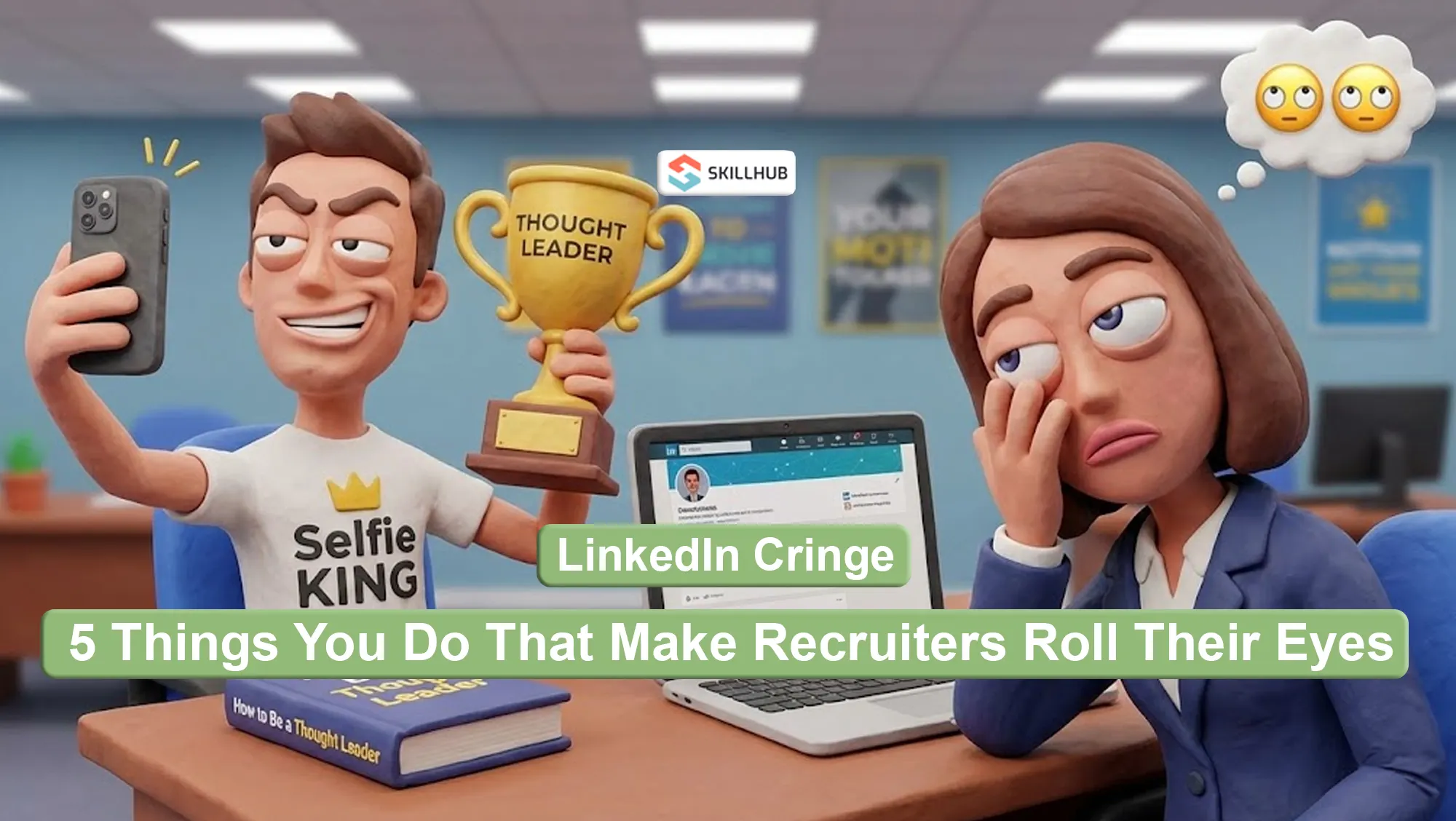
LinkedIn used to be a boring digital resume. It was a place where professionals wore suits, listed their skills, and politely congratulated each other on promotions.
Today, scrolling through your LinkedIn feed feels like walking through a chaotic carnival. You see CEOs crying in selfies. You see aspiring influencers writing 50-line poems about how "firing someone was the hardest day of my life." You see desperate pleas for attention masked as "humblebrags."
It has become the Cringe Capital of the Internet.
For job seekers, this creates a dangerous minefield. You are told you need to "build a personal brand" to get hired. So, you copy what you see others doing. But here is the secret that HR managers whisper about in their private Slack channels: They hate it.
There is a fine line between "Personal Branding" and "Public Embarrassment." One gets you hired; the other gets you screenshotted and mocked.
If you want to be taken seriously as a professional, you need to stop acting like an influencer. Here are the 5 most "cringe" behaviors on LinkedIn that are secretly sabotaging your job search.
1. The #OpenToWork Debate (The Green Banner)
Let’s start with the most controversial feature: the green photo frame that says #OpenToWork. LinkedIn introduced this to help people during the pandemic. In theory, it signals availability. In practice, it signals desperation.
The Recruiter Psychology: Recruiting is like dating. Everyone wants what they can't have.
- The Passive Candidate: Someone who is employed and mysterious is "high value." Recruiters chase them and do their best to make them easy to find.
- The Active Candidate: Someone wearing a neon sign that says "PLEASE HIRE ME" creates a subconscious bias. The recruiter thinks: "Why are they so available? Why hasn't anyone snatched them up yet? Is something wrong with them?"
The Verdict: Unless you are in a very junior role or a high-volume industry (like warehousing), turn it off.
- The Fix: You can still signal you are looking! Go to your settings and select "Open to work (Recruiters Only)." This hides the green frame from the public but shows it to people with a LinkedIn Recruiter license. It’s the difference between "winking across the bar" and "standing on a table screaming."
2. The "Broetry" (One-Line Spacing Virus)
You have seen these posts. They. Look. Like. This.
They start with a dramatic hook: "I almost quit today." Then they have 20 lines of single-spaced sentences. Then they end with a pseudo-inspirational lesson: "And that's why you should never give up on your dreams. Agree?"
Why It’s Cringe: This style is designed to hack the algorithm (keeping you reading longer), not to deliver value. It screams "I am trying to be an influencer." Recruiters look for communication skills. Writing in "Broetry" format shows you prioritize engagement farming over clear, concise business writing.
The Fix: Write like a human. Use paragraphs. Share real expertise, not melodramatic stories. If you want to build a brand, build it on hard skills and industry insights, not on formatting tricks.
3. The "Humblebrag" (Humbled and Honored)
"I am humbled and honored to announce that I have been selected as a Top 50 Assistant Regional Manager..."
No, you are not "humbled." You are proud. And that is fine! Being proud is healthy. Fake humility is annoying. The phrase "Humbled and Honored" has become a meme because it is insincere.
Why It Repels Recruiters: It signals a lack of authenticity. It feels like a press release for a person.
The Fix: Just say what happened.
- Cringe: "I am humbled to accept this award..."
- Authentic: "I worked really hard on this project for 6 months, and I’m really happy to see the team get recognized today. Thanks to [Name] for the support." Authenticity builds trust. Trust gets you hired.
4. The "Facebook-ification" (TMI)
LinkedIn is not Facebook. It is not Instagram. And it is definitely not your therapy journal. Recently, there has been a trend of posting:
- Crying selfies (to show "vulnerability").
- Political rants.
- Detailed stories about messy divorces or health issues.
The Recruiter Psychology: When a hiring manager sees drama on your profile, they don't feel empathy; they feel Liability. They think: "If they have no filter online, what will they say to our clients? Will they cause drama in the Slack channel? Are they a high-maintenance employee?"
The Fix: Keep it professional. You can be personal (e.g., "I learned resilience from running a marathon"), but don't be private (e.g., "My ex-husband is a narcissist"). Your profile is a landing page for your career. Make sure your LinkedIn headline focuses on your value prop, not your personal struggles.
5. The "Pitch Slap" (Aggressive Networking)
You connect with a recruiter. They accept. 0.5 seconds later, you send a message: "HI THANKS FOR CONNECTING. I AM LOOKING FOR A JOB AS A PM. HERE IS MY RESUME. CAN WE CALL TOMORROW?"
This is the digital equivalent of proposing marriage on the first date. It is rude, aggressive, and guarantees you will be ignored.
The Fix: Networking is about giving before taking.
- Step 1: Connect with a personalized note.
- Step 2: Engage with their content (comment on their posts).
- Step 3: Ask for advice, not a job. Read our guide on how to build your personal brand to understand the subtle art of attraction marketing.
%20(1).png)
What Actually Impresses Recruiters?
If you strip away the cringe, what is left? What actually works? Recruiters want Clarity and competence.
- A Professional Photo: Not a selfie, not a wedding crop. A clean headshot.
- A Clear Headline: Not "Ninja Rockstar Wizard." Just "Senior Data Analyst | Python | SQL."
- A Data-Driven About Section: Tell them what you solve. Check our LinkedIn summary examples for templates that convert.
- Recommendations: Real social proof from old bosses is worth 1000 viral posts.
Conclusion: Be Boringly Good
The most successful people on LinkedIn are often the quietest. They don't post crying selfies. They don't use the green banner. They just have a meticulously optimized profile, a strong network, and a reputation for excellence.
Don't let the algorithm trick you into acting like a clown. You are a professional. Act like one.
If you are worried that your LinkedIn profile is sending the wrong signals, don't guess. Consult with a Skillhub Career Expert. We will audit your digital presence and turn your profile from "Cringe" to "Hired."
Need a complete overhaul? Start with our guide on how to optimize your LinkedIn profile to get the basics right.



%20(1).webp)