How to Explain Gaps in Employment: A Strategic Guide for Resumes and Interviews
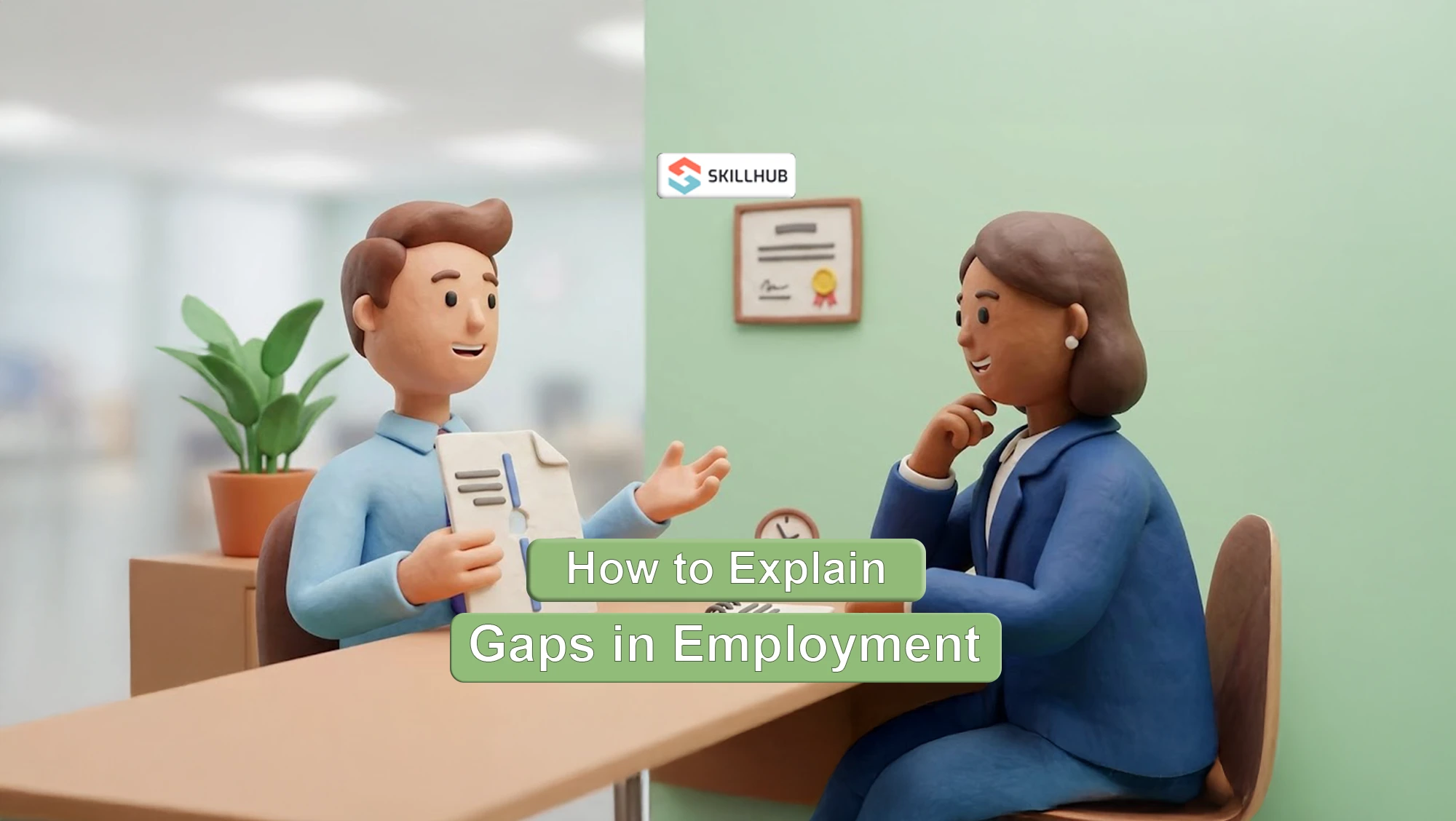
For decades, an employment gap on a resume was considered the "kiss of death." It was a scarlet letter that signaled unreliability, a lack of demand, or hidden professional baggage. Recruiters would scan the dates, see a six-month hole, and immediately move the application to the "no" pile.
That era is over. The modern career trajectory is no longer a straight, unbroken line from graduation to retirement. Economic recessions, a global pandemic, the rise of the gig economy, and a cultural shift toward prioritizing mental health and family have fundamentally altered the landscape. Gaps are now common. In fact, LinkedIn data suggests that over half of all job seekers have a career break on their profile.
However, while the stigma has faded, the scrutiny has not. Recruiters do not fear the gap itself; they fear the unknown. Silence is your enemy. If you do not provide a clear, confident narrative for your time away, the recruiter’s imagination will fill in the blank with the worst possible assumption: you were fired, you are unmotivated, or your skills have atrophied.
This guide is not about making excuses. It is about taking control of the narrative. We will provide a strategic framework for addressing employment gaps on your resume, LinkedIn profile, and in the interview chair, transforming a potential liability into a story of intentionality and resilience.
The Foundational Mindset: Own It, Don’t Apologize
The single biggest mistake candidates make regarding employment gaps is approaching them with shame. They try to hide the dates, they mumble through explanations, or they over-apologize. This behavior signals weakness. It tells the hiring manager, "I know this is bad, please forgive me."
You must shift your mindset from defense to offense. You are the CEO of your career. Sometimes, a CEO takes a sabbatical to restructure, to invest in R&D (education), or to manage a crisis. Many professionals use this time to pursue advanced degrees or enroll in programs like the "Baylor MBA in Dallas", which can help reposition their careers and expand leadership skills. That is not a failure; it is management.
The Difference Between Passive and Active Narratives:
- Passive (Weak): "I couldn't find a job for eight months."
- Active (Strong): "I took a deliberate pause to upskill in data analytics and identify the right cultural fit for my next long-term role."
- Passive (Weak): "I had to quit because of family issues."
- Active (Strong): "I stepped away to manage a family matter full-time. That situation is now resolved, and I am fully energized to return to the workforce."
Confidence changes the math. When you own your story, you strip the recruiter of their power to judge it.
Strategic Resume Formatting to Handle Gaps
Your resume is a marketing document, not a legal affidavit. While you must never lie about dates background checks will catch you immediately you have significant creative license in how you present your timeline to minimize the visual impact of a gap.
The "Years Only" Format Hack
The standard resume convention uses "Month, Year" for start and end dates (e.g., "May 2019 – February 2020"). This level of granularity highlights gaps of even a few months.
If your gap is less than a year, or if you have a long career history where months are no longer relevant, switch your entire resume to a Years Only format.
Standard Format (Highlights Gap):
- Job A: March 2021 – November 2021
- (Gap of 4 months)
- Job B: March 2022 – Present
Years Only Format (Smooths Gap):
- Job A: 2021
- Job B: 2022 – Present
This is standard practice for senior executives and is entirely ethical. It shifts the focus from the specific calendar weeks to the years of experience. However, be prepared to provide specific dates if asked during a background check.
Grouping and Labeling the Gap
If the gap is significant (one year or more), do not leave it blank. A blank space on a resume looks like a mistake. Fill it. Create an entry for your time away just as you would for a job. Give it a title, a "company" name, and bullet points.
This technique works because it answers the recruiter's question before they have to ask it. It shows you were busy, active, and professional, even while unemployed.
Example 1: The Sabbatical
Planned Career Sabbatical | 2022 – 2023
- Took a strategic pause to travel and focus on professional development.
- Completed the "Google Data Analytics Professional Certificate."
- Cultivated soft skills in adaptability and cross-cultural communication through extensive international travel.
Example 2: Full-Time Parenting
Full-Time Caregiver | New York, NY | 2020 – 2022
- Managed full-time household operations and caregiving responsibilities.
- Maintained professional network and kept current with industry trends via webinars and professional networking events.
- Note: You do not need to list "diaper changing" as a skill. The point is simply to account for the time.
The Functional vs. Chronological Resume Debate
Candidates with gaps are often advised to use a "Functional Resume," which groups skills together and hides the work history at the bottom. Do not do this.
Recruiters hate functional resumes. They view them with extreme suspicion because they are almost exclusively used to hide something. A functional resume screams, "I am trying to trick you."
Instead, stick to the Reverse-Chronological format but optimize your work experience section to focus heavily on achievements rather than tenure. If you have a gap, make sure the bullet points for the jobs you did hold are so powerful and data-driven that the gap becomes a secondary concern.
Scripting Your Explanations for the Interview
You have secured the interview. The resume did its job. Now, you are sitting across from a hiring manager, and they ask: "I noticed there's a gap between these two roles. Can you tell me about that?"
Do not panic. Do not ramble. Use these scripts. Keep your answer under 60 seconds, stop talking, and pivot back to the future.
Scenario 1: The Layoff (Changing the Narrative)
Layoffs are not a reflection of your competence. They are a reflection of a company's financial restructuring.
The Script: "My previous company went through a significant restructuring due to a merger, and unfortunately, my entire department was impacted. I’m proud of the work we accomplished there, specifically [mention one key win]. Since then, I’ve been very selective about my next move, looking for a role where I can apply my skills in [Your Skill] to a growth-focused organization like yours."
Why it works: It’s factual, positive, and forward-looking.
Scenario 2: Burnout and Mental Health
This is delicate. While mental health awareness is improving, you do not want to raise red flags about your ability to handle stress. You do not need to say "I had a nervous breakdown." You can use professional euphemisms like "Health Sabbatical" or "Recharging."
The Script: "After five years of sprinting in a high-growth environment, I decided to take a planned career break to recharge and reset. It was the best decision I could have made. I’m now fully refreshed, energized, and ready to bring that renewed focus to a challenging role. During my time off, I also kept my skills sharp by..."
Why it works: It frames the break as a proactive decision ("I decided") rather than a collapse. It emphasizes that you are now "fully refreshed."
Scenario 3: Caregiving (Parental or Family)
This is the most universally understood reason for a gap. You do not need to provide medical details of a sick relative.
The Script: "I stepped away from the workforce to care for a family member. That situation has now stabilized/resolved, and I have the full capacity to return to work. I am eager to get back to [Your Function] and start contributing again."
Why it works: It addresses the "availability" concern immediately ("situation has resolved") and pivots back to work.
Scenario 4: Failed Business or Freelancing
Trying to start a business is not a gap; it is a "real-world MBA." Companies love candidates with entrepreneurial grit, even if the venture failed.
The Script: "I took a year to pursue an entrepreneurial venture. It was an incredible learning experience I learned how to manage a P&L, sell directly to clients, and manage product timelines. While I ultimately decided that my strengths are better suited to a corporate environment, I’m bringing that 'owner's mindset' and hustle to my next role."
Why it works: It re-frames failure as a masterclass in business. Consult our guide on how to start a freelance career to see how to frame these skills even if you are returning to full-time work.
%20(1).png)
Addressing Gaps in the Cover Letter
Should you mention the gap in your cover letter?
- If the gap is less than 6 months: No. Ignore it. Focus on your qualifications.
- If the gap is 1 year+: Yes. Briefly.
If you leave a multi-year gap unexplained, the recruiter might assume you were in prison or unemployable. Address it in one sentence in your "About Me" section or near the end.
Example Sentence: "After a planned two-year career break to raise my children, I am returning to the workforce with renewed energy and a strong desire to apply my decade of project management experience to your team."
This allows you to control the narrative before they even look at your resume dates.
The Expertise Barrier: Consistency Across Channels
The most dangerous thing you can do is have conflicting stories. If your resume uses the "Years Only" format to hide a gap, but your LinkedIn profile shows the specific months, you look dishonest.
- Audit Your Digital Footprint: Ensure the dates on your resume match the dates on LinkedIn exactly.
- The Interview "Tell": If you tell one interviewer you were "traveling" and another that you were "freelancing," they will compare notes. Pick your narrative and stick to it. Consistency builds trust.
Conclusion: Your Value is Not Defined by Continuity
Your career is a marathon, not a sprint. It is a jungle gym, not a ladder. Gaps are a natural part of a long professional life. Employers are not looking for a robot who has worked 40 hours a week without a break since age 22. They are looking for a human being who solves problems, fits the culture, and delivers results.
If you can prove you can do the job today, what you were doing six months ago matters far less than you think. Own your history, frame your gap with confidence, and focus the conversation on the future value you will create.
Worried that your employment gap is holding you back? Consult with a Skillhub Career Expert today. We can help you craft a narrative that turns your career break into a compelling story of growth and readiness.


%20(1).webp)