Is a Panel Interview a Good Sign? The Unfiltered Survival Guide
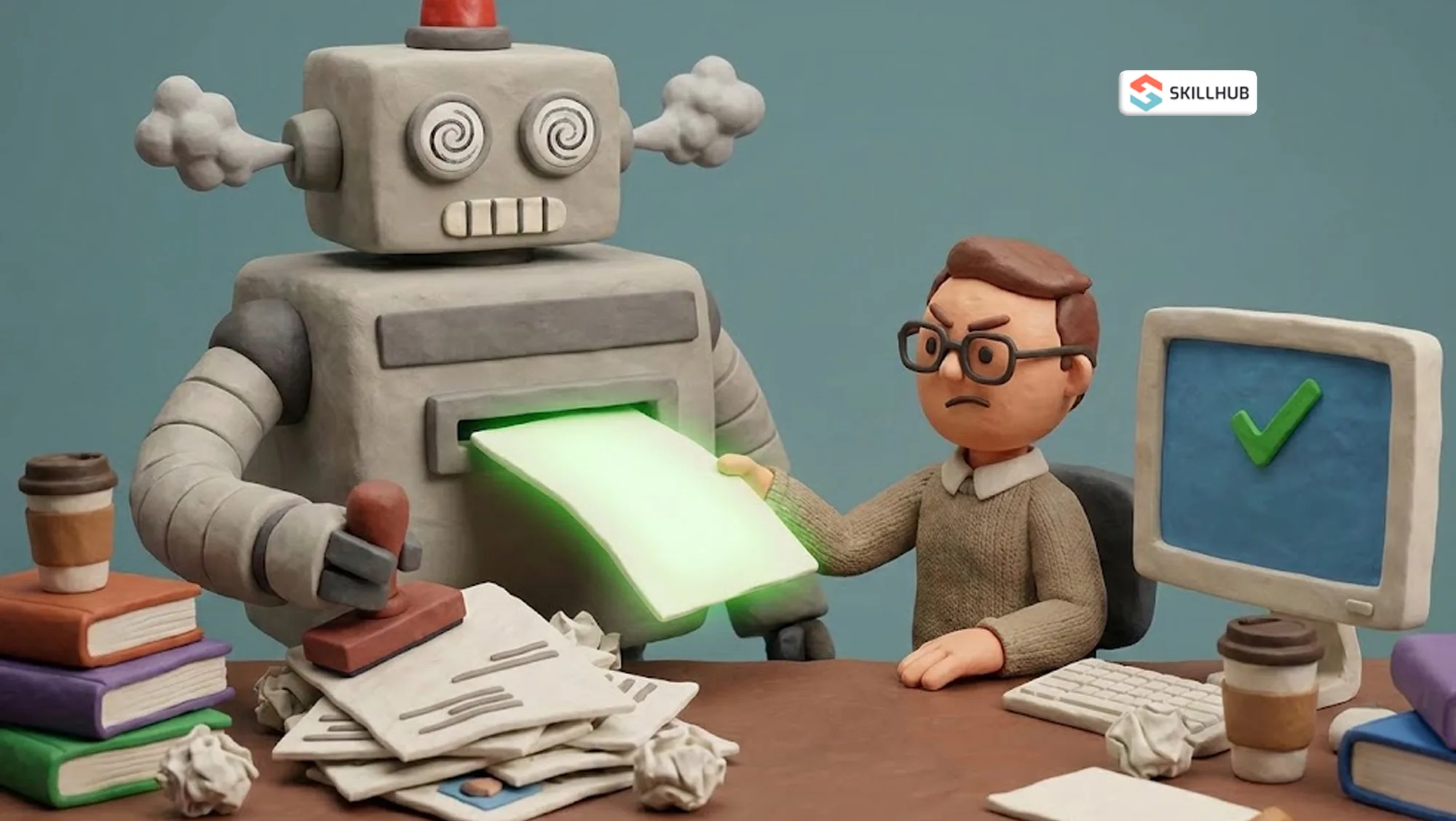
Your phone buzzes. You passed the initial HR screen. You feel a brief, fleeting moment of triumph. Then you read the actual email.
“For the next round, you’ll be meeting with Sarah from Marketing, David the VP of Sales, our lead developer Mark, and Jessica from HR. They are looking forward to speaking with you on Tuesday.”
Four people. One room. Just you.
Suddenly, it feels less like a corporate hiring process and more like a firing squad. You start sweating. Your brain immediately jumps to the worst-case scenario. Why do they need four people? Are they trying to intimidate me?
Let’s stop right there. Take a breath. Look at this logically.
If you are frantically typing "is a panel interview a good sign" into Google right now, I am going to save you a lot of anxiety: Yes. It is the best sign you could possibly get. You are not walking into a trap. You are walking into a room full of tired, busy people who desperately want you to be the answer to their problems. But if you treat this like a standard one-on-one conversation, you will bomb it. You need to understand the room dynamics.
Here is the absolute truth about what a panel interview actually means, what happens behind those closed doors, and how to manipulate the group dynamic so completely that they have no choice but to offer you the job.
Let’s Define It: The Real Panel Interview Meaning
People overcomplicate this. If you are looking for the exact panel interview meaning, it’s simple: a company puts two or more decision-makers in a single room (or on a single Zoom grid) to interrogate one candidate at the same time.
That’s the definition. But why do they do it?
It has absolutely nothing to do with testing your stress levels. It comes down to pure corporate logistics. Calendars are a nightmare. Trying to get a VP, a Director, and an HR lead to find four separate hours over the next three weeks to interview you individually will delay the hiring process by a month. And if they wait a month, a competitor will hire you first.
So, they compress the timeline. The panel interview format is a speed-run. They throw everyone into the same room for 60 minutes so everyone can nod their heads, agree you aren't crazy, and push the paperwork through.
Is a Panel Interview a Good Sign? Let's Do the Math
I hear candidates panic about this all the time. They think a panel means the company is highly skeptical of them.
Wrong. Think about the payroll sitting in that room.
If a company puts a VP, a Director, a Senior Manager, and an HR business partner in a room for an hour, do you know how much that hour costs the company in billable time? Hundreds of dollars. Often thousands.
Corporate America does not spend a thousand dollars of internal payroll on a candidate they are "on the fence" about. They reserve panels for finalists.
If they invited you to this stage, your how to write a resume late-night formatting sessions actually paid off. On paper, you are already hired. They know you have the technical chops. The panel isn’t there to figure out if you know how to use Salesforce or write Python.
They are there to figure out if you are going to be annoying to sit next to for 40 hours a week. They want to hire you. Your only job on Tuesday is to not talk them out of it.
What to Expect From a Panel Interview (The Reality Check)
You can't wing a group setting. You just can't. If you don't know what to expect from a panel interview, the pacing will completely overwhelm you.
In a normal one-on-one, there is a rhythm. The hiring manager asks a question. You answer. They take notes for a few seconds. You get a breather. You take a sip of water.
A panel destroys that rhythm. What to expect in a panel interview is a complete lack of downtime.
While you are giving a brilliant answer to Sarah’s question about project management, David is already locked and loaded with a follow-up about budget cuts. The millisecond you stop talking, David fires. It feels like a relentless tennis match where your opponents have four racquets and you have one.
You will also face a bizarre mix of personalities. Every panel has archetypes:
- The Sniper: They ask hyper-specific, deeply technical questions to see if you crack.
- The Silent Judge: They will not speak. They will just take aggressive notes while frowning. (Ignore their face, they usually just have a headache).
- The Buddy: The person nodding and smiling at everything you say.
Do not fall into the trap of only making eye contact with "The Buddy." That brings us to strategy.
How to Prepare for a Panel Interview
If you walk into that room without doing your homework, they will eat you alive. Here is exactly how to prepare for panel interview survival.
1. Stalk the Roster
Ask the recruiter for the names and job titles of everyone who will be in the room. If they don't offer it, demand it politely. "Could you please share the names of my interviewers so I can properly prepare?"
Once you have the names, hit LinkedIn hard. How long have they been there? What did they do before?
You need this information because you have to tailor your answers to different ears. If the Lead Developer asks you a question, you talk about system architecture. If the HR manager asks you a question, you pivot to talk about company culture. You have to feed everyone exactly what they came to hear.
2. Print Physical Copies
I don't care if it's 2026 and everything is digital. If this is an in-person meeting, print five flawless copies of your resume.
When you sit down at the conference table, slide a copy over to every single person. Why? Because somebody in that room was dragged into this meeting five minutes ago. They haven't read your file. They don't even know what job you are interviewing for. Giving them a piece of paper immediately grounds them. Plus, it makes you look ridiculously prepared.
3. Master the "Soft" Answers
Because there are multiple brains in the room, they will heavily index on behavioral questions. They want to see how you handle team conflict.
You need absolute mastery over your soft skills narrative. You need a rock-solid, non-cliché answer prepared for when they inevitably ask what are your greatest strengths. If you say "I work too hard," four people will simultaneously roll their eyes. Give them a real story about a time you solved a communication breakdown.
4 Brutal Panel Interview Tips That Actually Work
Preparation is done. Now you are in the chair. Use these panel interview tips to command the room.
Tip 1: The "Sprinkler" Eye Contact Rule
This is where 90% of candidates fail. Sarah asks a question. The candidate turns to Sarah, locks eyes with Sarah, and delivers a three-minute monologue directly into Sarah’s soul.
Meanwhile, the other three people in the room pull out their iPhones under the table. You lost them.
You have to use the Sprinkler Method. When Sarah asks the question, start your answer by looking directly at her. But halfway through your first sentence, pan your eyes across the room. Look at David. Look at the silent note-taker. Treat the room like an audience. As you wrap up your final point, bring your eyes right back to Sarah to close the loop.
It makes everyone feel included. It proves you can command a boardroom.
Tip 2: Name-Dropping (The Good Kind)
People are incredibly narcissistic. We all love hearing our own names. Use this.
If Mark asks you a technical question, don't answer it in a vacuum. Connect it. “That’s a great point, Mark. And it actually ties directly into what Sarah was saying earlier about the Q3 marketing push. If we structure the database like this, it solves both problems.”
When you do this, you aren't an interviewee anymore. You are a peer leading a strategic meeting. You are synthesizing their different departments in real-time.
Tip 3: Weaponize Silence
When the questions are coming rapid-fire, your adrenaline will spike. You will feel an intense psychological pressure to start talking the very second their mouth stops moving.
Resist it.
When they hit you with a complicated scenario question, pause. Literally count to three in your head. Say, “That’s an interesting layer to the problem. Let me think about how I handled a similar bottleneck last year.”
Taking three seconds of dead silence in a room full of executives projects a level of raw confidence that you cannot fake. It says, I am not intimidated by your pacing. I am thoughtful. I am in control.
Tip 4: Interrogate Them Back
At the end of the hour, they will ask the standard: “Do you have any questions for us?”
If you say no, you lose. If you ask a generic question like "What is the culture like?", you lose.
You have four different departments sitting in front of you. This is a goldmine. Ask targeted, specific questions that force them to talk to each other.
- "David, from a sales perspective, what is the most frustrating bottleneck you experience when dealing with the product team right now?"
They will start discussing internal company problems right in front of you. And suddenly, you are just part of the team hashing out solutions.
%20(1).png)
After the Interrogation
You survived. You walked out. Do not ruin it by sending one lazy, mass "Thank you for your time" email to all four of them on the same thread.
Send four separate, highly personalized emails. Mention the specific joke David made. Mention Sarah's comment about the upcoming product launch. Prove you were actually listening to them as individuals, not just surviving them as a collective mob.
When they sit down on Wednesday to debrief, all four of them are going to say, "Yeah, I liked them." And when that happens, you get the offer. Once the offer hits your inbox, the dynamic flips. You have the power. Don't leave money on the table; use a solid strategy for salary negotiation to get paid what that entire panel clearly thinks you are worth.
And once the ink is dry, you can finally figure out how to quit your job professionally and walk away from your old boss with your head held high.
A panel interview isn't a test of your resume. It’s a test of your nerve. Keep your head, read the room, and take the job.


%20(1).webp)