How to Respond to a Job Rejection Email: The Strategy Nobody Uses
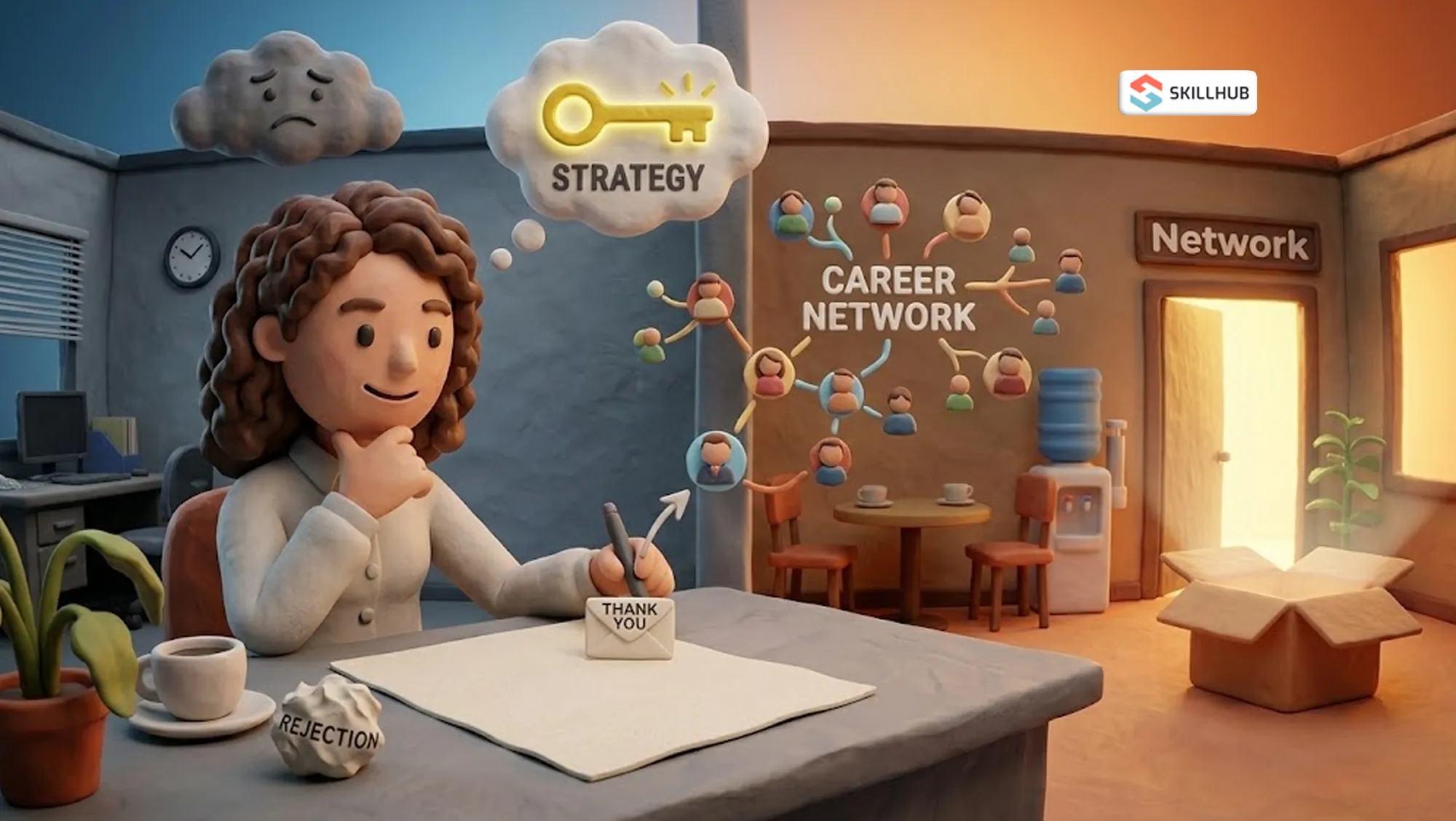
You check your phone between meetings. You see an email notification pop up from the recruiter you spoke with last week.
"Thank you so much for taking the time to interview with our team, however..."
You don't even need to read the rest of the sentence. Your stomach drops. You already know exactly what it says. They went in another direction. They chose the other candidate.
Your immediate, deeply human instinct is to delete the email, close your laptop, and stare at the wall for ten minutes. You want to completely ignore them. Why should you spend another second of your day writing a thoughtful reply to a company that just rejected you?
Because ignoring them is a massive strategic mistake.
Figuring out how to respond to a job rejection email is one of the most underutilized networking hacks in the corporate world. The candidates who get the job are not always the smartest people in the room; they are the people who know how to play the long game.
Here is the unfiltered truth about what happens after you get rejected, why responding gives you a massive advantage, and the exact templates you need to extract valuable feedback and keep the door wide open.
The "Silver Medalist" Reality: Why You Should Send an Email After Job Rejection
Let’s look at the math behind a corporate hiring decision.
When a company reaches the final round of interviews, they usually have two, maybe three, top candidates. The hiring manager is forced to make a painful choice. They pick Candidate A. They send Candidate B (you) the rejection email.
But here is what nobody tells you: Candidate A does not always work out. Sometimes Candidate A fails the background check. Sometimes they leverage the offer to get a raise at their current company and decline the job at the last second. Sometimes they accept the job, work for three weeks, realize they hate the corporate culture, and quit.
When that happens, the hiring manager panics. They do not want to spend another month reviewing applications. They want to hire Candidate B immediately.
If you ignored their rejection email, or worse, replied with an angry, passive-aggressive rant, you are permanently off the list. But if you sent a graceful, professional job rejection email response? You are the very first person they are going to call.
The Core Strategy: How to Reply to a Rejection Email
You need to hit three specific psychological triggers in your response. You want to project professionalism, gratitude, and a complete lack of desperation.
1. Speed matters. Do not wait four days to reply. When you wait, it looks like you were sulking. Reply within 24 hours. It shows that you are emotionally stable, resilient, and still operating like a professional.
2. Express genuine gratitude. Do not be sarcastic. Thank the recruiter and the hiring manager for their time. Interviews are exhausting for them, too. Acknowledge the effort they put into the process.
3. Leave the door cracked open. Explicitly state that you would love to be considered for future roles. Do not beg. Just plant the seed that you are still a fan of the company.
The Hard Part: How to Ask for Feedback After Job Rejection
This is where 99% of candidates fail. They get rejected, and they reply with a demanding email that says, "Can you tell me why I didn't get the job?"
Recruiters hate this question. It puts them in an incredibly awkward, legally risky position. If they say the wrong thing, they could expose the company to a discrimination lawsuit. So, they give you a generic, meaningless answer like, "We just felt the other candidate was a slightly better fit."
If you want actual, actionable feedback, you have to ask specific, safe questions.
Do not ask "why" you were rejected. Ask "where" you can improve. Make it about your professional development, not about their decision-making process.
For example, ask if there were specific hard skills they felt were missing from your profile. Ask if your presentation style lacked clarity. Ask if you struggled to effectively communicate what are your greatest strengths during the panel interview.
When you frame the request as a desire for personal growth, hiring managers let their guard down and give you the brutal, honest truth you need to hear.
4 Templates: How to Respond to a Job Rejection Email Examples
Staring at a blank screen while you are feeling rejected is miserable. Do not reinvent the wheel. Copy and paste these templates, adjust the bracketed information, and hit send.
Template 1: The Standard Graceful Exit
Use this when you did not make it past the initial recruiter screen, or when you just want to politely close the loop without asking for feedback.
Subject: Thank You — [Your Name] — [Job Title] Role
Hi [Name],
Thank you for getting back to me and letting me know about your decision. While I am disappointed I won’t be joining the team, I really appreciate the time you took to speak with me and share more about [Company Name]’s goals for the year.
It sounds like you are building an incredible product, and I will definitely be cheering from the sidelines.
Please keep me in mind if any future opportunities open up that might align with my background. I wish you and the team the absolute best of luck with the new hire!
Best regards,
[Your Name]
Template 2: The "Ask for Feedback" Approach
Use this how to respond to a rejection email for a job when you made it to the final rounds and had a strong rapport with the hiring manager.
Subject: Thank You / Feedback Request — [Your Name]
Hi [Name],
Thank you so much for the update. I completely understand, though I’m naturally a bit disappointed as I was very excited about the possibility of joining the [Department] team.
I really enjoyed our conversations, especially our discussion about [mention a specific topic or project you talked about].
Since I am always looking for ways to grow and improve as a professional, would you be open to sharing one or two pieces of constructive feedback from my interview? I would love to know if there were any specific areas where my experience fell short, or if there are certain resume list skills I should focus on developing further.
Either way, thank you again for your time and transparency. I wish the team massive success this quarter.
Best,
[Your Name]
Template 3: The Long-Term Networking Play
Use this email response to job rejection when you desperately want to work for this specific company eventually, even if it takes years.
Subject: Following Up — [Your Name] — [Job Title]
Hi [Name],
Thank you for letting me know. While this wasn’t the news I was hoping for, I am really grateful for the opportunity to learn more about the internal culture at [Company Name].
Meeting you and [Interviewer 2's Name] only reinforced how much I admire the work your team is doing in the [Industry/Niche] space.
I would love to stay connected as I continue to follow the company’s growth. I just sent over a connection request on LinkedIn. If a role opens up in the future that fits my background, I would jump at the chance to interview again.
Thanks again, and congratulations to the candidate who landed the role!
Best,
[Your Name]
Template 4: The Internal Rejection Response
Use this when you applied for a promotion or a transfer within your current company and got turned down.
Subject: Thank You — [Your Name] — [Job Title] Interview
Hi [Name],
Thank you for the update regarding the [Job Title] position. While I am disappointed, I really appreciate the time you took to interview me and explain the vision for the department.
I remain completely committed to my current role on the [Your Current Team] and am excited to continue driving results here.
When things settle down next week, I would love to grab a quick 15-minute coffee with you to discuss how I can better position myself for leadership opportunities in the future. I want to make sure I am actively developing the skills the company needs most.
See you around the office,
[Your Name]
%20(1).png)
What NOT to Say in a Job Rejection Email Response
Now that you know how to reply to rejection email properly, we need to cover the fatal errors. When human beings get rejected, their ego takes a massive hit. Ego makes people type incredibly stupid things.
- Never ask them to reconsider. The decision is made. The paperwork is signed. If you reply and try to pitch yourself one more time, you do not look persistent; you look desperate and completely unaware of corporate boundaries.
- Never debate their reasoning. If they actually give you feedback, do not argue with it. If they say you lacked management experience, do not reply with a three-paragraph essay defending your leadership skills. Just say "Thank you for the insight."
- Never express anger. Even a slightly passive-aggressive tone ("Well, good luck finding someone willing to work those hours") will get you permanently blacklisted. Recruiters talk. Industries are smaller than you think.
The Aftermath: Pivot and Adjust
Send the thank you email after job rejection. Close your laptop. Go take a walk. Let yourself be annoyed for exactly one evening.
Then, wake up the next day and look objectively at your strategy.
If you are constantly getting rejected after the final round, your interview skills are the bottleneck. You are not building enough trust in the room.
If you are getting rejected immediately after submitting your application, your documentation is the problem. It is time to sit down, rethink how to write a resume, and figure out exactly what the algorithms are rejecting. Did your formatting break the ATS? Did you fail to properly explain employment gaps, leaving the recruiter to assume the absolute worst?
A rejection is just data. It tells you exactly where your funnel is breaking down. Collect the data, ask for the feedback, adjust your strategy, and move on to the next one. The right offer is out there.



%20(1).webp)