How International Students and Exchange Visitors Can Build a Career in the U.S.
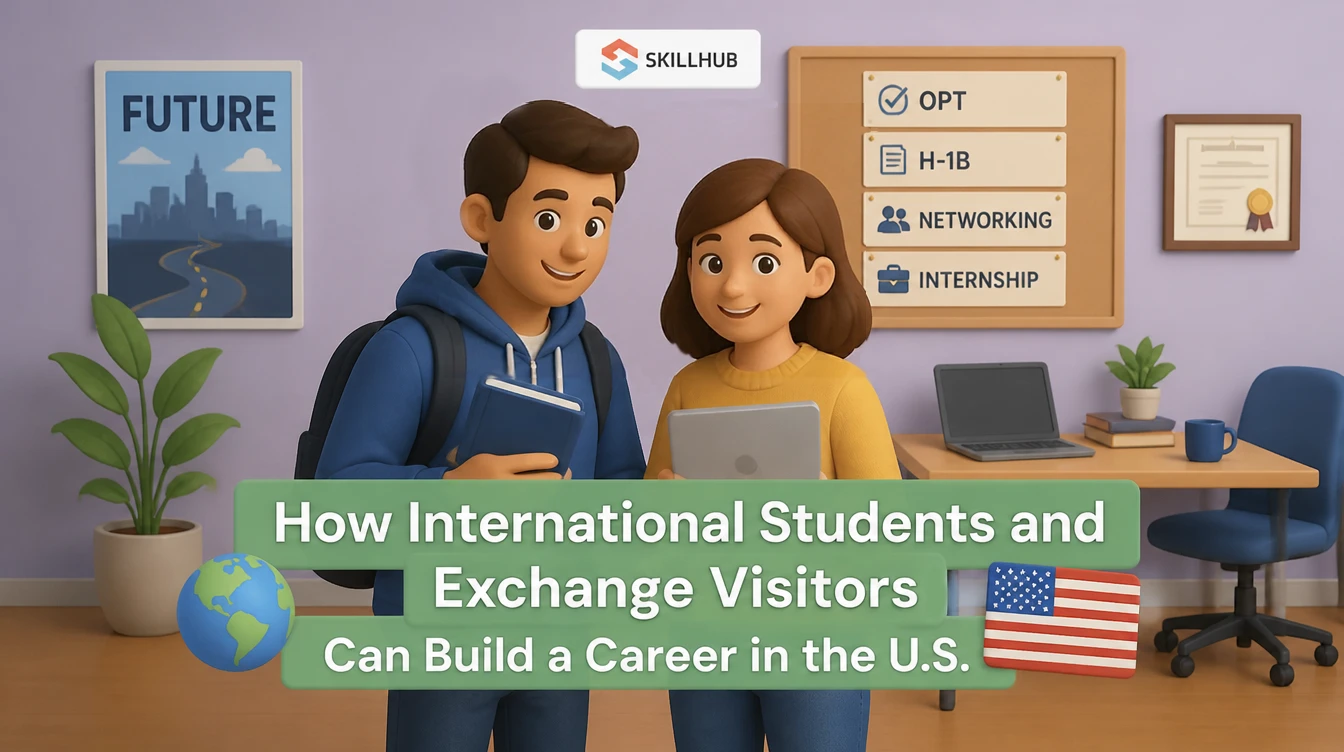
Getting to the United States on a student or exchange visa is a big deal. Then the scramble starts, and that part tends to catch people off guard. You're after a job, or a training spot, and the U.S. hiring game doesn't run on the rules you grew up with. Resumes look different here. The search runs on software and on who you know. And what you're even allowed to do for work? That comes down to your visa.
So this guide sticks to what actually moves things. A resume U.S. recruiters won't toss, a skills section people notice, a job hunt with some focus to it, and a straight answer on work authorization. Nail these early and the offers show up sooner than you'd expect.
Quick aside first. There's the health insurance thing too, which your school or sponsor will check on, and we'll circle back to it near the end. Your energy belongs on the career side, though, so that's where most of this lives.
Write a U.S.-Style Resume
One page. If you're early in your career, that's basically the rule, because U.S. recruiters skim and they're quick about it. Newest role on top, then work backward. And a bunch of stuff you'd happily put on a CV back home? Leave it off over here. Your photo, your birth date, whether you're married, where you're from. All normal abroad, but American hiring norms treat the lot of it as a cue to stop reading.
Start each bullet with something you did, and stick a number on it when the work gives you one. "Grew signups 30 percent" lands. "Responsible for marketing" doesn't. Then send the thing as a PDF, since a Word file has a habit of falling apart on someone else's screen.
Different job titles or degree names from another country? Swap them for the closest U.S. version, or the person reading is left guessing at what you did all day. A couple of summary lines up top help too, just enough for a recruiter to place you in about five seconds.
Sorting Out Your Skills Section
Your skills list works best when it's selective. Look at the jobs you're going after and pull out the abilities that actually turn up in them, the software you know, the methods you work with, that sort of thing. All of it earns a spot only when it maps to the role.
And don't bury your languages. Speaking two or three is a real edge in the U.S. market, so write them down with your level beside each. One more thing, because the words matter. If every posting says "data analysis" and your resume says "analytics," a recruiter searching for the first might never find you. Use their phrasing wherever it's honestly yours.
Use the Cover Letter and LinkedIn to Your Advantage
People love to skip the cover letter. For plenty of U.S. roles it still counts, though, especially when you're new and your story needs a little explaining. Keep it tight. Three short paragraphs tying your background to that one specific job will beat a whole page of how excited you are.
Meanwhile your LinkedIn is working in the background whether you tend to it or not. Fill the thing out. Give it a headline that says what you do, line it up with your resume, and keep in mind that recruiters dig through LinkedIn by keyword, same as they scan resumes. The words decide whether you even come up.
Run a Focused Job Search
Before a human reads your resume, software usually does. Most U.S. employers push applications through an applicant tracking system first, and it's scanning for the exact terms the job post used. So borrow those terms. Pull them straight off the posting and into your resume where they fit. That's frequently the whole difference between getting read and getting filtered out.
Once you're past the bots, it's people again. Your campus career center exists for this, and it's weirdly underused, so go bug them. Actually use LinkedIn. Ask folks already in the jobs you want for fifteen minutes of their time. Turn up to the networking events nobody enjoys. A referral tends to carry you a lot further than one more cold application ever will.
Know What Work You Are Allowed to Do
Now the part that catches people out. What you're allowed to do for work depends on your visa category, and honestly the rules are stricter than people tend to assume.
J-1? Academic training might be possible, but not before your program sponsor signs off in writing. F-1 students usually go a different way, through the practical training options, curricular or optional, the ones everyone calls CPT and OPT. Either way, take any offer to your sponsor or your school's DSO (that's the Designated School Official who handles this) before you say yes. Work without the right authorization and the whole visa is suddenly at risk. Not worth it.
Get the Practical Setup Out of the Way
One loose end worth tying off early, because it can hold up your enrollment if you don't. Schools and J-1 sponsors generally want proof of health insurance, and J-1 rules specifically ask for medical cover plus evacuation and repatriation. The good news, you can often waive a pricey university plan by bringing your own comparable coverage, and student-specific insurers like ISO Student Health Insurance (ISOA) get used for exactly that, built for international students and priced like it. Handle it once, then get back to the job search.
%20(1).png)
Where People Usually Trip Up
A few mistakes come up again and again with new arrivals. Two pages when one would've done it. Applications so generic they ignore the words in the posting. A LinkedIn profile that's half empty. Saying yes to a job before checking whether you're even allowed to take it. Letting insurance ride until the school just bills you for theirs. None of these are hard to fix once someone points them out.
Pulling It Together
Your first few months go better when the pieces work together instead of pulling against each other. A tidy one-page resume and a LinkedIn profile you've actually finished will get you noticed. From there, a search that stays focused and leans on referrals is what tends to land the interviews. Sorted work authorization keeps the offer real. And the boring stuff, insurance included, keeps your status clean while you build. Start with the resume, honestly. Once that's solid, the other pieces have a way of following.
Common Questions
Q: How long should my U.S. resume be as an international student? A: Aim for a single page while you're still under roughly ten years of experience. If it's running long, drop the older or unrelated jobs rather than spilling onto a second page. Recruiters here move fast through a stack, and shorter tends to work in your favor.
Q: Can I work in the U.S. on a J-1 or F-1 visa? A: Sometimes, and only with approval. J-1 visitors can do academic training once the sponsor okays it in writing. F-1 students usually lean on CPT or OPT. Run it by your sponsor or DSO first, though, before you commit to any role.
Q: How do I get my resume past the applicant tracking system? A: Keep your section headings standard so the software can actually read them, and reuse wording from the posting wherever it genuinely applies to you. Plain formatting helps, so skip the tables and images. And whatever file format the employer asks for, send that one.
Q: Do international students need health insurance? A: In most cases they do. Most schools and J-1 sponsors require it and will ask for proof. The upside is you can often waive an expensive university plan with comparable coverage from a student insurer.


%20(1).webp)