Resume Horror Stories: 7 Real Mistakes That Got Candidates Blacklisted Instantly
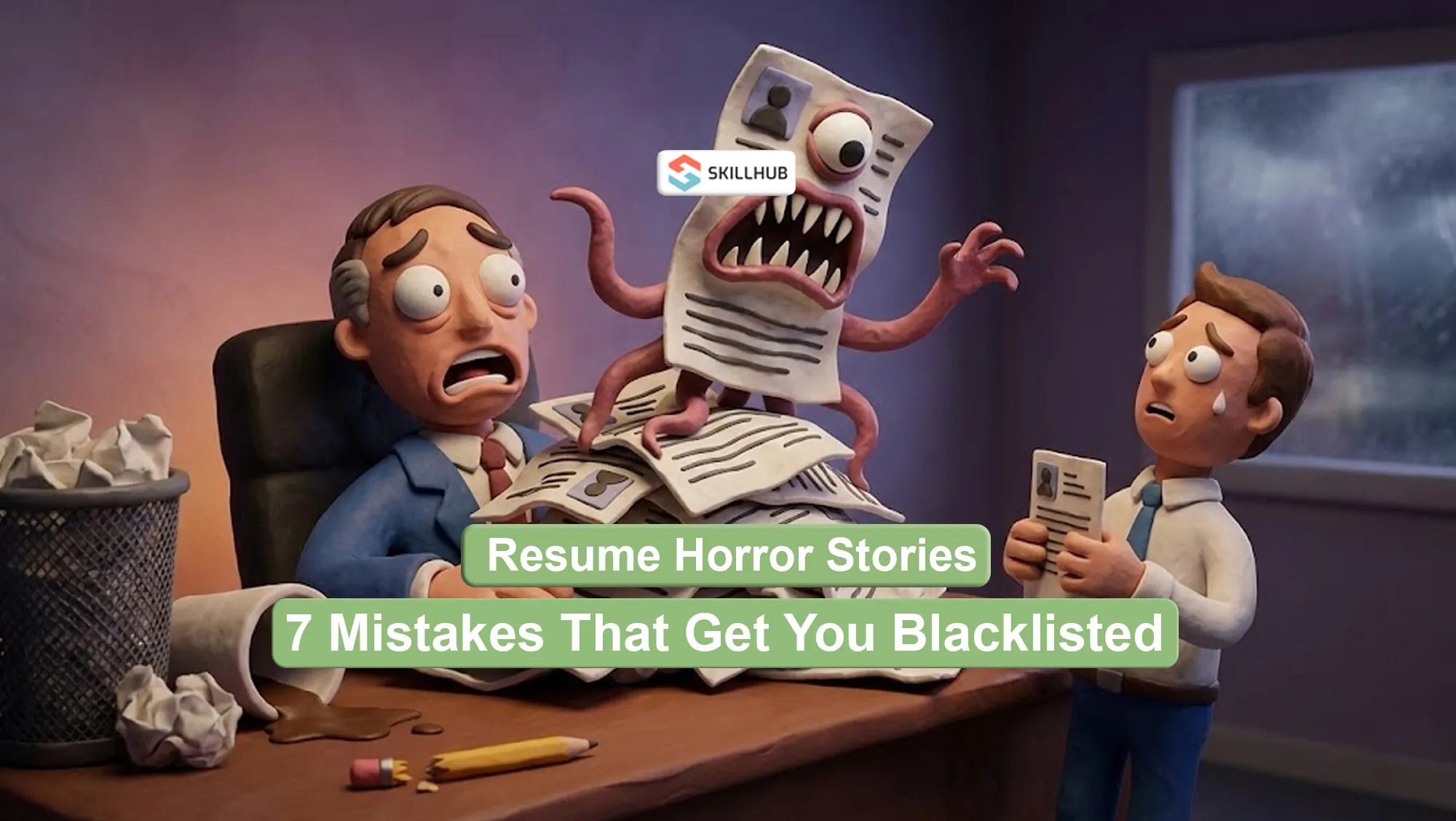
Recruiters drink. If you ask them why, they won't tell you about the stress of filling quotas or the pressure from hiring managers. They will tell you about the resumes.
Most job seekers assume that if they are rejected, it is because they lacked a specific skill or because someone else had more experience. But often, the truth is far more embarrassing. There is a hidden category of rejections that never get a polite "thank you for applying" email. These are the instant deletions. The "forward to the whole office for a laugh" disasters. The blacklists.
In the high-stakes world of job hunting, you have approximately six seconds to make a first impression. If those six seconds reveal a lack of judgment, a lack of attention to detail, or a frightening lack of self-awareness, your PhD and your decade of experience will not save you.
We gathered the most cringe-worthy, jaw-dropping true stories from the front lines of recruitment to compile this list. These are not just funny anecdotes; they are cautionary tales. Here are the 7 resume horror stories that got candidates blacklisted instantly, and the lessons you must learn from them.
1. The "Track Changes" Confession
The Horror Story: A candidate applying for a high-level marketing director role sent in a seemingly perfect PDF. The recruiter, impressed by the layout, converted it back to Word to copy some details into the internal system. That’s when the "Track Changes" comments appeared.
In the margins of the document were comments from the candidate’s current boss (who evidently didn't know the candidate was leaving) critiquing the work on a project listed in the resume. Even worse, there were comments from the candidate’s friend saying things like: "Lie about this number, they’ll never check" and "Make sure you delete the part about getting fired from [Company X]."
The Result: Instant rejection and a permanent note in the ATS.
The Lesson: Digital files have metadata. They have histories. Sending a document that hasn't been scrubbed or finalized is like handing someone a diary instead of a business card.
- The Fix: Always, always export to a "flattened" PDF before sending. Never send an editable Word doc unless specifically requested. And never, ever document your lies in the margins.
2. The Email Address from High School (party_animal_69)
The Horror Story: A hiring manager for a conservative financial firm received a resume from a promising junior analyst. Great GPA, solid internship at a bank, impeccable formatting. Then, they went to schedule the interview. The contact email at the top of the page? bootylicious_babe_xoxo@hotmail.com.
The Result: The manager laughed, closed the tab, and moved to the next candidate. "If they lack the judgment to create a professional Gmail account," the manager reasoned, "I cannot trust them to email our clients."
The Lesson: Your email address is part of your personal brand. It is the very first test of professional maturity. Using a nickname, a sexual reference, or a "funny" handle signals that you are stuck in adolescence.
- The Fix: Create a dedicated email: firstname.lastname@gmail.com. If that is taken, add a middle initial or a number. Keep it boring. Boring gets hired.
3. The "Copy-Paste" Catastrophe
The Horror Story: A candidate was applying for a Project Manager role at Google. They wrote a passionate objective statement at the top of their resume: "I am extremely excited to bring my skills in agile methodology and team leadership to Facebook, a company I have admired for years."
The Result: This is the cardinal sin of job hunting. It tells the recruiter two things:
- You are blasting this resume to everyone (you don't care about us).
- You have zero attention to detail (a critical skill for a Project Manager).
The Lesson: Recruiters know you are applying elsewhere. That is fine. But seeing a competitor's name on the document is an insult. It’s like calling your date by your ex’s name.
- The Fix: Use a resume builder or template where the "Target Company" field is clearly marked, and triple-check it. Or better yet, remove the specific company name from the resume file entirely and save that customization for the cover letter. Check our bad resume examples to see more formatting fails.
4. The "TMI" (Too Much Information) Disaster
The Horror Story: A candidate for an HR role decided that their professional experience wasn't enough to convey their personality. Under a section titled "Personal Interests," they listed:
- "Collecting vintage dolls."
- "Reconciling with my estranged father."
- "Practicing witchcraft."
In another case, a candidate included their marital status, the names of their three children, and their social security number right at the top (a huge security risk).
The Result: The recruiter was creeped out. While "personality" is good, "intimacy" is bad. An interview is a business meeting, not a therapy session or a first date.
The Lesson: In the US and most Western markets, personal details (age, religion, marital status, photo) are protected classes. Including them puts the employer in a legally awkward position, so they often just delete the resume to avoid a discrimination lawsuit.
- The Fix: Keep it professional. If you list hobbies, make them neutral (Running, Chess, Coding). Avoid anything political, religious, or deeply personal.
5. The "Selfie" Headshot
The Horror Story: A candidate applying for a customer-facing sales role included a photo on their resume. This is already risky in the US (see above), but the choice of photo was the nail in the coffin. It wasn't a professional headshot. It was a selfie taken in a car, wearing sunglasses, with a visible seatbelt strap across the chest. Another candidate used a cropped photo from a wedding where you could clearly see a disembodied arm of someone else draped around their shoulder.
The Result: It signaled a complete lack of professional standards. If you don't know how to present yourself on paper, you won't know how to present yourself to a client.
The Lesson: Unless you are a model or an actor, you generally do not need a photo on a US resume. If you are in Europe or a market where it is required, pay for a professional headshot.
- The Fix: Remove the photo. Let your experience speak. If they want to see what you look like, they will look up your LinkedIn profile (so make sure that photo is professional). See our resume writing tips for guidance on layout and visuals.
6. The 7-Page Novel
The Horror Story: A senior executive with 25 years of experience applied for a C-suite role. He felt that everything he had ever done was important. He submitted a 7-page, single-spaced document. It included his high school GPA, his duties as a camp counselor in 1995, and a full paragraph description of every conference he had ever attended.
The Result: The recruiter took one look at the "Wall of Text," sighed, and deleted it. No one has time to read a novel.
The Lesson: Your resume is a marketing brochure, not an autobiography. The goal is not to tell them everything; the goal is to tell them enough to get an interview. Brevity is a sign of respect for the reader's time.
- The Fix:
- Entry Level: 1 Page.
- Experienced: 2 Pages.
- Executive/Academic: 3 Pages max (usually).
- Use a resume checker to analyze your word count and density.
7. The Unexplained Gap (and the Bad Lie)
The Horror Story: A candidate had a 2-year gap on their resume. Instead of explaining it or hiding it, they tried to get creative. They listed a fake company: "Vandelay Industries" (a reference to the show Seinfeld). They thought it was a funny placeholder they would change later, but they forgot. Another candidate stretched the dates of their previous job by 18 months to cover the gap. The background check revealed the truth instantly.
The Result: Blacklisted for fraud. Lying about dates is the easiest thing for a background check to catch. Once your integrity is in question, you are unhirable. Incidents like this highlight the importance of AI fraud detection in screening candidates before hiring.
The Lesson: Gaps happen. Layoffs happen. Recruiters are surprisingly forgiving of the truth, but they are merciless with liars.
- The Fix: Be honest. Label the gap as "Sabbatical," "Caregiving," or "Full-time Education." Or use a formatting strategy (Years Only) to minimize it. Do not invent jobs.
%20(1).png)
Why Do Smart People Make These Mistakes?
The people in these stories weren't necessarily unqualified. They were just careless. They suffered from "Resume Blindness" staring at a document for so long that they stopped seeing the errors.
When you are stressed about finding a job, your brain tunnels on the big things (Do I have the skills?) and misses the small things (Did I spell the company name right?).
Conclusion: Don't Let a Typo Ruin Your Career
The job market is brutal enough without self-sabotage. You are competing against AI filters, hundreds of other applicants, and strict hiring managers. You cannot afford to give them an easy reason to say "No."
Your resume is the most important financial document you own. It determines your salary, your career trajectory, and your future. It deserves more than a quick glance and a spell-check.
The ultimate insurance policy? Get a second pair of eyes on it. Not your friend’s eyes (see Story #1), but professional eyes.
Consult with a Skillhub Career Expert to get a brutal, honest review of your resume before you send it out. We catch the horror stories so you don't become one.
If you are unsure where to start, read our guide on how to make a resume that is clean, professional, and blacklist-proof.


%20(1).webp)