The Burnout Epidemic: 7 Strategies to Manage Work Stress and Reclaim Your Productivity

Burnout is not merely a "bad day" or a temporary bout of fatigue after a long week. It is a chronic, systemic condition recognized by the World Health Organization as an occupational phenomenon resulting from unmanaged workplace stress. It is characterized by three distinct dimensions: feelings of energy depletion or exhaustion, increased mental distance from one’s job (or feelings of negativism or cynicism related to one's job), and reduced professional efficacy.
For high-achieving professionals, burnout is particularly insidious. It often disguises itself as "dedication" until it is too late. The symptoms insomnia, irritability, brain fog, and a profound loss of motivation are frequently ignored or medicated with caffeine and sheer will. This approach is unsustainable. Ignoring burnout does not make it go away; it compounds the interest on a debt that will eventually bankrupt your physical and mental health.
This guide is not a collection of superficial wellness tips. We will not tell you to "take a bubble bath" or "think positively." Instead, we provide a rigorous, strategic framework for managing stress, setting non-negotiable boundaries, and restructuring your relationship with work. This is an operational plan for reclaiming your productivity and your life.
The Foundational Mindset: Burnout is a Systemic Problem, Not a Personal Failure
The first step in recovery is removing the stigma. Many professionals view burnout as a personal failure a sign that they are not "tough enough" or "efficient enough" to handle the workload. This is a false narrative. Burnout is rarely caused by the individual; it is almost always caused by the environment.
Christina Maslach, the pioneer of burnout research, identified six root causes: workload, control, reward, community, fairness, and values. If your work environment consistently violates these core human needs, burnout is the inevitable physiological response. It is a sign that your strongest traits your responsibility, your drive, your willingness to say "yes" are being exploited by a broken system.
Burnout is not a badge of honor. It is a warning light on your dashboard. Treating it requires a fundamental shift in mindset: you must stop viewing your energy as an infinite resource and start managing it as a finite, precious asset that belongs to you, not your employer.
7 Actionable Strategies to Combat and Prevent Burnout
Recovery requires active management. You cannot wait for the stress to subside; you must engineer a new way of working.
Strategy 1: The "Digital Detox" and Setting Hard Boundaries
In our hyper-connected work culture, the boundary between "work" and "home" has evaporated. The expectation of immediate response the "always-on" culture keeps your nervous system in a constant state of low-grade "fight or flight." This chronic hyper-arousal is a primary driver of exhaustion.
You must re-establish hard boundaries. This is not about asking for permission; it is about establishing professional protocols.
Tactical Steps:
- The "Hard Stop": Pick a time (e.g., 6:00 PM) when your workday ends. Close your laptop. Turn off notifications. Communicate this to your team: "I check email between 8 AM and 6 PM. If it is a genuine emergency after hours, please call me." You will find that 99% of "emergencies" can wait until morning.
- The Weekend Protocol: Remove Slack and email apps from your personal phone on weekends. If you are constantly checking for messages, you are not recovering; you are merely "on call."
- Notification Hygiene: Turn off all non-essential notifications during the workday. Every "ping" breaks your focus and forces your brain to switch contexts, which drains cognitive energy.
Strategy 2: Identify Your "Energy Vampires" (The Audit)
Not all work is created equal. Some tasks invigorate you, while others drain you completely. To combat burnout, you must understand your personal energy economy. Conduct a one-week audit of your time.
If you find that 80% of your week is spent in the "Zone of Drudgery," no amount of vacation will cure your burnout. You need to restructure your role or delegate these tasks to someone for whom they are a "Zone of Competence."
Strategy 3: Reconnect with Your "Why" (Finding Meaning)
The second dimension of burnout is cynicism the feeling that your work doesn't matter. This often happens when we become disconnected from the impact of our labor. We get lost in the metrics and forget the mission.
To combat this, you must actively look for the "line of sight" between your daily tasks and a positive outcome. Who does your work help? How does it contribute to the company's mission? If you cannot find meaning in your current role, it is critical to find it elsewhere.
Actionable Steps:
- Mentorship: Helping a junior colleague grow can reignite your sense of purpose.
- External Impact: If your job pays the bills but feeds the cynicism, look for fulfillment in finding a job you love or through volunteering where your skills make a tangible difference.
- Client Connection: Talk to the actual humans who use your product or service. Hearing their success stories can remind you why you do what you do.
Strategy 4: The Power of "Micro-Breaks" and Deep Work
Productivity is not linear. You cannot sprint for eight hours straight. Trying to do so leads to "presenteeism" you are physically at your desk, but your brain has shut down. To reclaim productivity, you must work in pulses.
The Technique:
Adopt a rhythm like the Pomodoro technique (25 minutes of focus, 5 minutes of rest) or a 90-minute "Deep Work" cycle followed by a 15-minute break.
The Critical Rule:
During your break, you must truly disconnect. Do not switch from a spreadsheet to social media. That is not a break; it is just a different kind of information processing.
- Stand up and stretch.
- Look out a window.
- Drink water.
- Walk around the block.
These "micro-breaks" allow your prefrontal cortex to recharge, preventing the cognitive fatigue that leads to end-of-day exhaustion.
Strategy 5: Re-build Your "Support Network"
Burnout thrives in isolation. When we are overwhelmed, our instinct is often to withdraw, to cancel plans, and to "hunker down" to get the work done. This is counterproductive. Social connection is one of the most potent buffers against stress.
You need to rebuild your "community" pillar. This doesn't mean forced networking; it means authentic connection.
- The "Vent" Buddy: Find a trusted colleague with whom you can be honest about work frustrations. Just the act of verbalizing stress can reduce its physiological impact.
- Non-Work Identity: Reconnect with friends who don't care about your job title. You need to be reminded that you are a human being, not just a "productivity unit."
- Team Rituals: If you are a leader, reinstate small, non-work rituals. Hosting a memorable work cocktail party or a simple team lunch can restore the human connections that make work bearable.
Strategy 6: Have the "Difficult Conversation" with Your Manager
If your workload is mathematically impossible, no amount of breathing exercises will fix it. You must have a courageous conversation with your manager. This is not about complaining; it is about negotiating priorities.
The Script:
"I want to ensure I'm delivering the highest quality work on [Project A]. Currently, the volume of ad-hoc requests and the timeline for [Project B] are stretching my capacity, and I'm concerned the quality of [Project A] will suffer. I'd like to review my current priority list with you. If [Project A] is the top priority, what can we de-prioritize, delegate, or move to next quarter to ensure it gets the focus it needs?"
This approach frames the conversation around business results (quality, focus) rather than personal complaints. It forces the manager to make a trade-off decision, shifting the burden of prioritization back where it belongs.
Strategy 7: The "Escape Hatch" (Knowing When to Leave)
Sometimes, despite your best efforts, the burnout persists. You set boundaries, and they are violated. You negotiate workload, and it increases. You seek meaning, and find none.
In these cases, burnout is a signal that you have outgrown your environment. It is your body telling you that the cost of staying is too high. This is not a failure; it is data. It is time to initiate your exit strategy.
Signs You Need to Leave:
- You feel physical dread on Sunday nights.
- Your values are fundamentally misaligned with the company's actions.
- The environment is toxic (bullying, harassment, or chronic instability).
- You have tried strategies 1-6 for three months with no change.
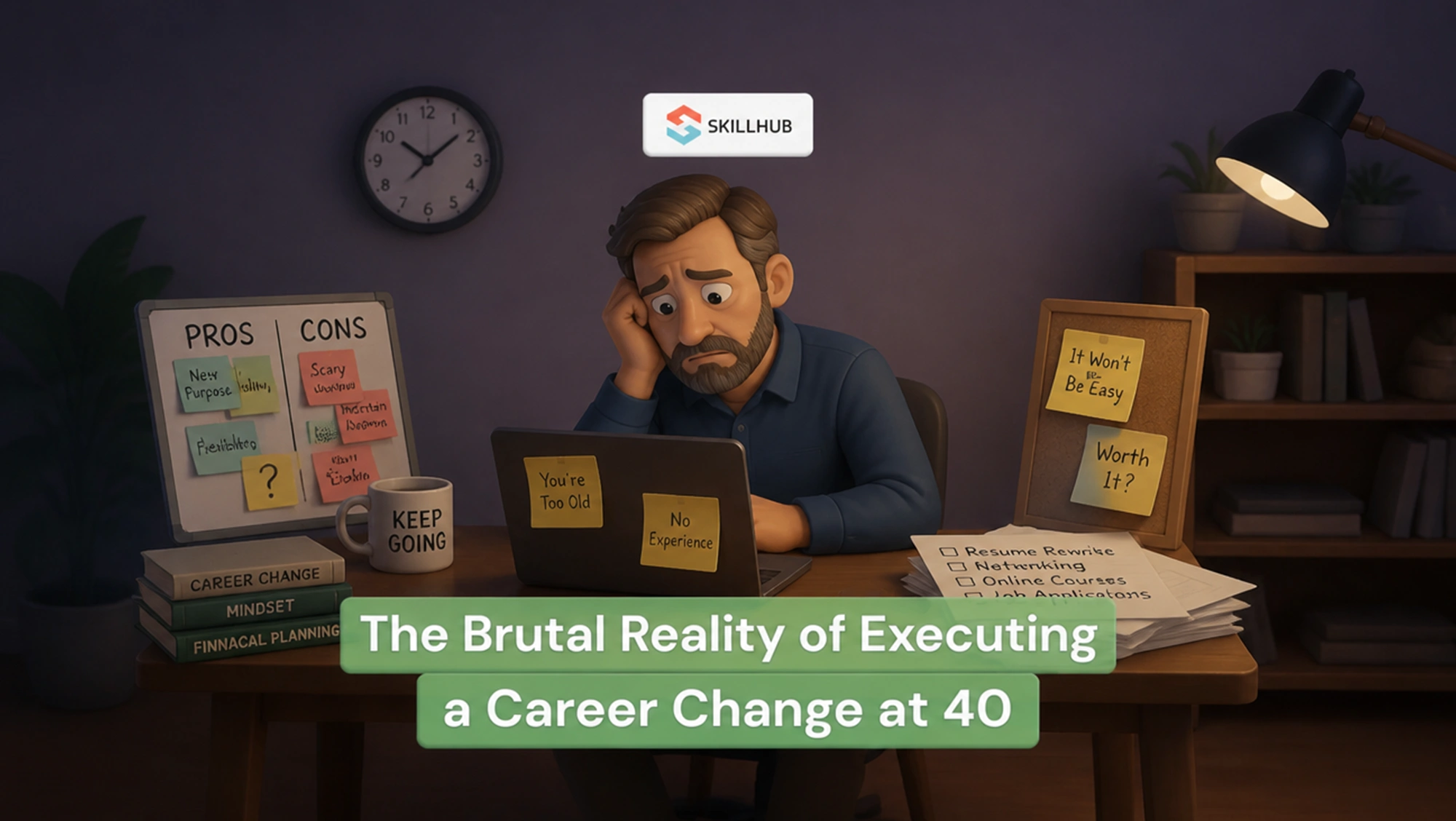
If you recognize these signs, your focus must shift from "coping" to "planning." Update your resume, reconnect with your network, and start looking for an environment where you can thrive.
%20(1).png)
The Expertise Barrier: Is It Burnout or Just a Bad Job?
Self-diagnosis is difficult. High performers often confuse burnout (which can be fixed with rest and boundaries) with a fundamental career mismatch (which requires a change). Staying in a mismatched role leads to a cycle of recovery and relapse, often expressed as quiet quitting.
Ask yourself: "If I could do this exact job, but with reasonable hours and a supportive boss, would I be happy?"
- Yes: You are burned out. Fix the environment.
- No: You are in the wrong career. Fix the path.
Conclusion: Your Career is a Marathon, Not a Sprint
Managing your energy is a professional skill, just as critical as your technical abilities or your leadership skills. Burnout is not inevitable. It is a structural problem that requires a structural solution. By setting boundaries, auditing your energy, and refusing to accept chronic stress as "normal," you can build a sustainable, high-performing career that supports your life, rather than consuming it.
If your burnout is a signal that it's time to move on, ensure you are ready for the market. Consult with a Skillhub Career Expert today to update your resume and prepare for a transition to a healthier, more rewarding role.


%20(1).webp)