The Digital Nomad Lie: Why Working from a Beach in Bali is Actually a Nightmare for Your Career
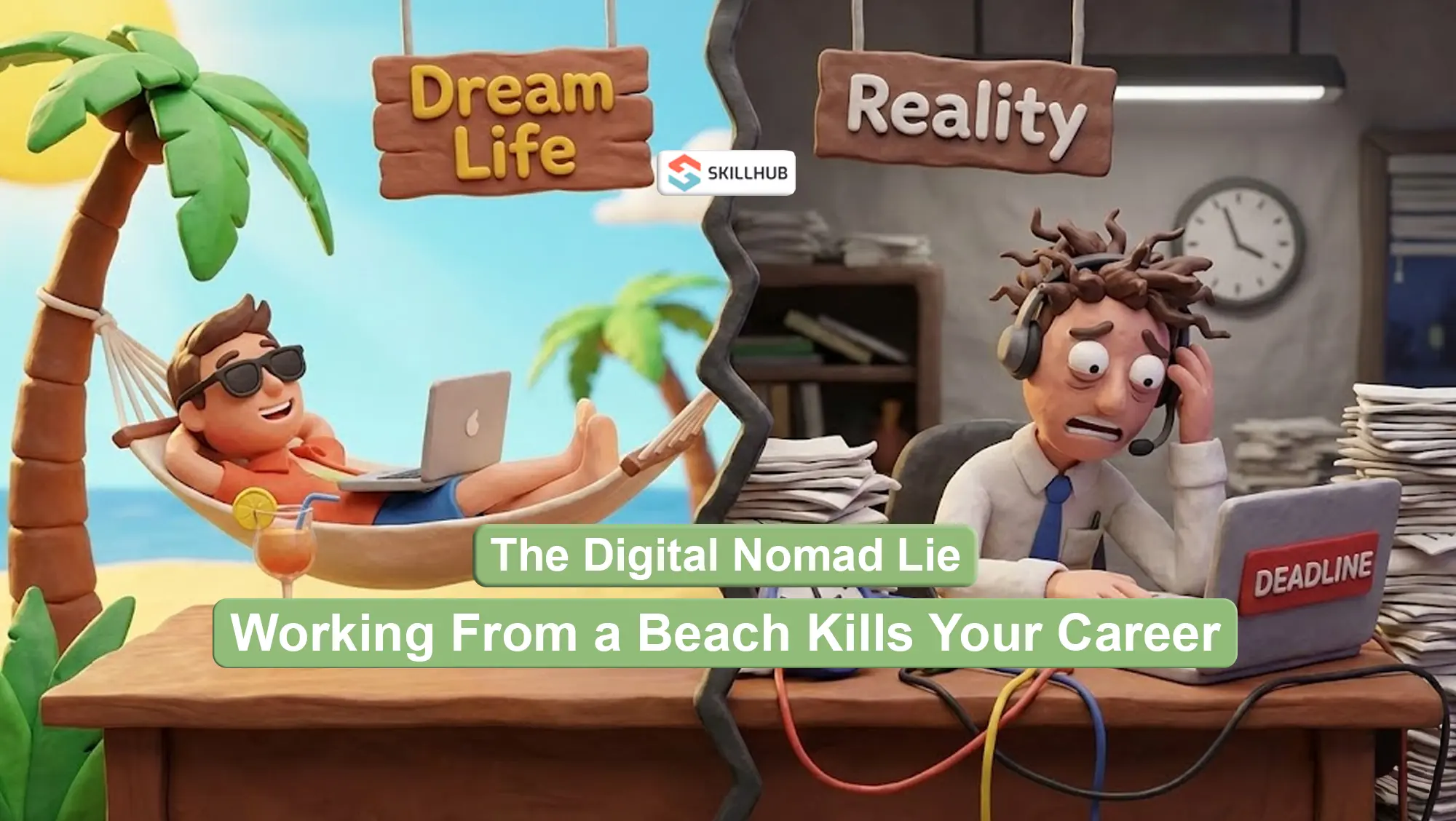
Open Instagram, search for #DigitalNomad, and you will see the same image repeated a thousand times: A tanned twenty-something sitting on a pristine white beach in Bali or Tulum. A laptop is balanced precariously on their knees. A coconut with a straw sits nearby. The caption reads: "My office for the day. #Blessed #LaptopLifestyle."
It is the ultimate millennial fantasy. Why sit under fluorescent lights in a cubicle when you could be sending emails from paradise? It sells a promise of absolute freedom that you can hack the system to have a high-paying career and a permanent vacation simultaneously.
But ask anyone who has actually tried to work a serious, high-stakes corporate job from a hammock, and they will tell you a different story. The sand gets in the keyboard. The sun glare makes the screen unreadable. The "luxury villa" Wi-Fi cuts out every time it rains. And the 12-hour time difference means "paradise" is actually a lonely 3:00 AM Zoom call in a dark room while everyone else parties.
This is the Digital Nomad Lie.
While remote work is a valid and powerful career shift, the "Nomad" lifestyle is often a career-killer in disguise. It trades long-term professional growth for short-term Instagram likes. Here is the unvarnished truth about why treating your career like a backpacking trip might be the most expensive mistake you ever make.
1. The "Wi-Fi Anxiety" is Paralyzing
In a corporate office, internet connectivity is like oxygen: you don't notice it until it's gone. In a developing country (where most nomads go for the low cost of living), it is a daily battle.
The Reality: You have a critical presentation with the VP of Sales at 9:00 AM EST. You are in Chiang Mai. It is 8:00 PM local time.
- Scenario A: The power grid fluctuates (common in monsoon season).
- Scenario B: The cafe closes.
- Scenario C: The bandwidth throttles because 50 other nomads are trying to upload 4K vlogs on the same router.
The Career Impact: When you drop off a call during a critical moment, your boss doesn't think, "Oh, poor adventurous soul." They think, "Unreliable." Reliability is the currency of remote work. If you cannot guarantee your connection, you cannot be trusted with important clients. Serious remote workers don't work from beaches; they work from boring apartments with Ethernet cables.
2. The Ergonomic Nightmare
That photo of the laptop on the knees looks relaxed. Try doing it for 8 hours.
The Reality: Working from a beanbag, a hammock, or a cafe stool is a recipe for chronic pain. Without a proper desk, external monitor, and lumbar support, your productivity tanks. You work slower. You get tired faster.
- The Result: "Tech Neck" and repetitive strain injuries within months.
The Career Impact: You simply cannot produce "Deep Work" in a chaotic environment. While you are fighting back spasms, your competition back home (with their dual-monitor setups) is outpacing you.
3. The Time Zone Trap (The Vampire Shift)
The world's economy largely runs on EST, GMT, or PST time zones. Bali is GMT+8.
The Reality: If your team is in New York and you are in Bali, their 9:00 AM stand-up meeting is your 9:00 PM. To collaborate, you must live like a vampire. You sleep during the beautiful sunny days (when you are supposed to be surfing) and work all night in isolation.
The Career Impact: You become invisible. You miss the "watercooler" moments. You miss the ad-hoc meetings where decisions happen. You become the person who just submits tasks, not the person who leads strategy.
- Resource: Read our remote job search guide to understand why companies prioritize time-zone alignment over almost anything else.
4. The "Out of Sight, Out of Mind" Promotion Problem
Proximity bias is real. Even in remote-first companies, the people who are "online" during core hours and available for quick syncs get promoted.
The Reality: The Digital Nomad is often viewed as a "flight risk" or a freelancer, even if they are full-time. Management subconsciously assumes you are more focused on your travels than your KPIs.
The Career Impact: When a new leadership role opens up, do they give it to:
- Candidate A: Lives in the same time zone, has a professional home office, and is always responsive.
- Candidate B: Lives in a van in Portugal and takes 4 hours to reply because they were hiking.
Candidate A gets the promotion. Candidate B gets the envy of their friends, but a stagnant salary. This is a classic case of sacrificing leadership skills development for lifestyle.
5. The Tax and Legal Minefield
This is the boring part that influencers never mention. Working on a tourist visa is illegal in almost every country.
The Reality:
- Immigration Risk: If you tell a border agent you are "working remotely," you can be denied entry and banned. You have to lie and say you are a "tourist," which creates constant low-level stress.
- Tax Fraud: If you stay in a country too long (usually 183 days), you become a tax resident. Failing to pay local taxes is a crime. Failing to tell your HR department where you are creates a tax nexus liability for them.
The Career Impact: If your company finds out you are working from a country where they don't have a legal entity, they might fire you immediately to avoid a lawsuit. Major corporations track IP addresses for this exact reason.
For professionals seeking remote roles with realistic expectations about time zones, work environments, and infrastructure requirements, AI-powered platforms like AI agentic platform for job search can filter opportunities by time zone overlap, specify “”no camera required”" positions, and surface companies that provide equipment stipends - helping you find remote work that actually fits your lifestyle rather than forcing you into the “”vampire shift”" or working from cafes with unreliable WiFi.
%20(1).png)
The Alternative: The "Slowmad" or "Home Base" Model
So, is the dream dead? No. But the "Nomad" version of it is flawed. The professionals who succeed at this use a different strategy.
1. The "Slowmad" Approach: Instead of moving every week, they move every 3-6 months. They rent a proper apartment with verified fiber-optic internet. They set up a real desk. They integrate into the routine. They treat the location as a home, not a vacation.
2. The "Workation" Model: They keep a home base (for stability and tax residency) and take 2-4 weeks a year to work from somewhere else. This balances adventure with reliability.
3. The Freelance Pivot: If you truly want the backpacker lifestyle, stop trying to fit a corporate square peg into a round hole. Become a freelancer. Freelancers are paid for output, not availability. If you want to surf at 2 PM on a Tuesday, go ahead as long as the deadline is met.
- Resource: Check our guide on how to start a freelance career to see if this path suits your personality better.
Conclusion: Career First, Travel Second
The "Digital Nomad" lifestyle, as sold on social media, is a lie. It is a marketing funnel designed to sell you courses on "how to be a digital nomad."
Real freedom doesn't come from working from a beach; it comes from having a career so valuable that you have autonomy. It comes from financial stability. It comes from being so good at what you do that employers will tolerate your time zone differences because they need you.
Build the career first. The travel will follow.
If you are trying to negotiate a remote arrangement or pivot to a role that allows genuine flexibility, you need a resume that screams "Professional," not "Tourist." Consult with a Skillhub Career Expert to position yourself as a high-value remote asset.
Are you feeling burnt out and thinking running away to Bali is the answer? Read our article on burnout strategies first it might save you a plane ticket.


%20(1).webp)