Job Demotion: How to Survive a Step Down (Or Intentionally Ask for One)
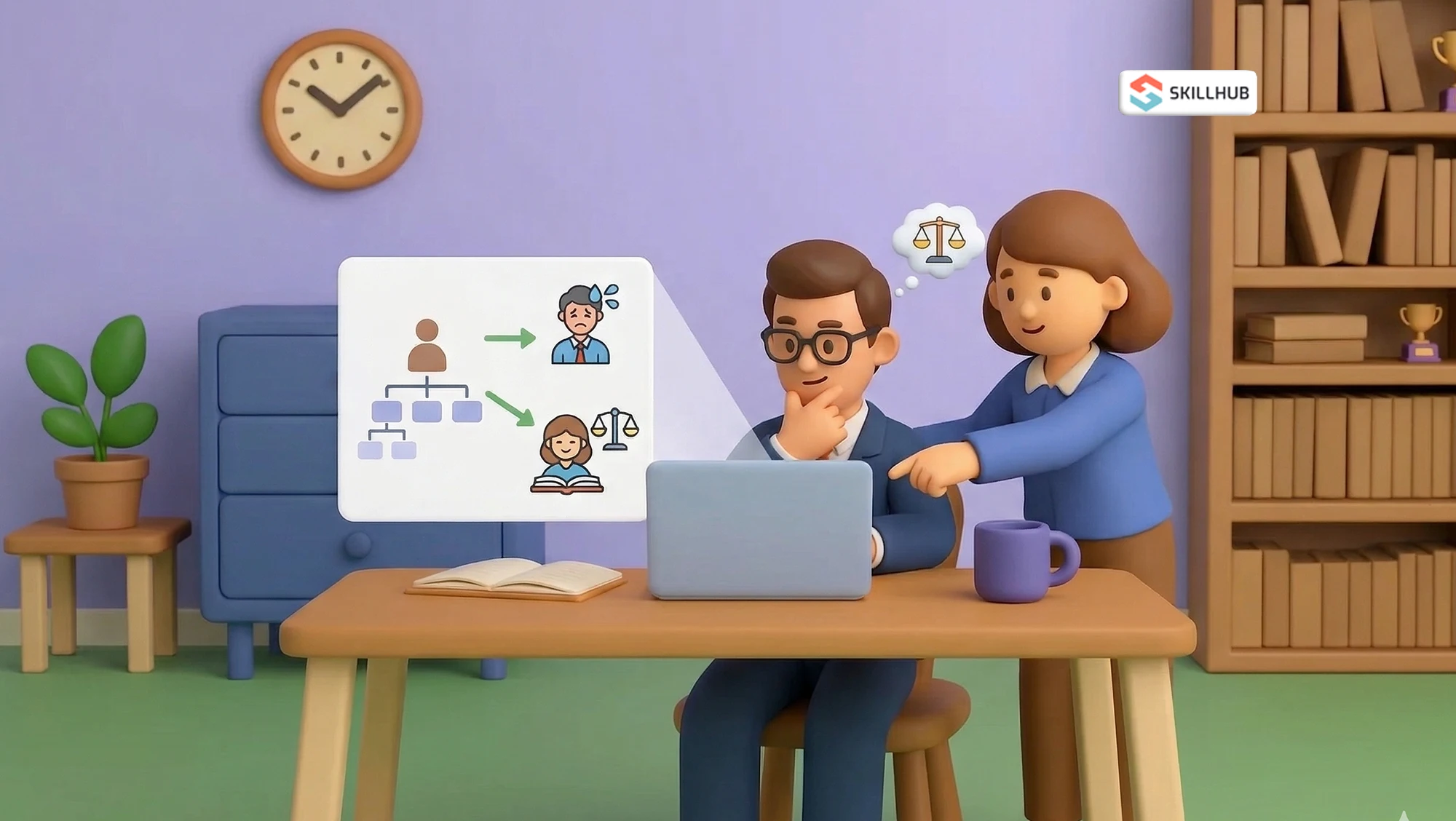
You are called into a meeting with your director and HR. They do not look happy. Over the next fifteen minutes, they explain that your role is changing. You are losing your direct reports, your title is being adjusted downward, and your salary might be taking a hit.
"I was demoted at work," you text your partner from the parking lot.
Your ego is crushed. You feel an overwhelming mix of anger, embarrassment, and panic. Getting demoted at work feels like the ultimate professional failure.
But there is another side to this coin. A completely different scenario that is secretly happening in corporate offices every single day.
What if you want the demotion? What if you were promoted to a management role, absolutely hate the politics, miss doing the actual creative work, and want to step back? Demoting yourself is one of the most taboo topics in corporate America, yet it is often the healthiest career move a person can make.
Whether you are dealing with a forced step down, or you are actively trying to figure out how to step down from a position without getting fired, you need a strategy. Furthermore, you need to know exactly how to translate this messy reality onto your resume.
Here is the unfiltered truth about what a demotion at work actually means, how to survive the psychological hit, how to voluntarily ask for a step down, and the exact formatting rules for showing both promotions and demotions on paper.
Part 1: The Involuntary Demotion (When They Make the Call)
When you are hit with a forced job demotion, your immediate instinct is to quit on the spot.
Do not do that. Walk out of the room, go home, and take 48 hours to process the anger. Do not send any emails. Do not complain to your coworkers. You need to figure out why this happened before you can decide how to handle a demotion at work professionally.
The Two Main Reasons for Demotion at Work
There are generally only two reasons a company strips you of your title. You need to identify which one applies to you, because it dictates your next move.
1. Demotion Due to Organizational Restructuring This has absolutely nothing to do with your performance. The company merges with another firm, budgets are slashed, or a department is eliminated. Instead of firing you outright (a layoff), the company values you enough to keep you on the payroll, so they offer you a lower-level role.
2. Performance-Based Demotion This is the hard pill to swallow. You were promoted to Sales Director, but you missed your quotas for three straight quarters. Being demoted from management because you could not handle the leadership responsibilities is a massive blow to the ego. However, the company is choosing to keep you because you were an incredible individual contributor before the promotion.
"A demotion is not the end of your career. It is the end of a specific chapter. How you react to the demotion dictates whether you write the next chapter at this company or somewhere else."
How to Deal with Demotion (The Survival Guide)
If you decide to stay at the company after getting demoted, you have to play the long game. Dealing with demotion requires extreme emotional intelligence.
- Swallow the Ego: You will now be sitting in meetings alongside people who used to report to you. You might even report to someone who used to be your peer. If you act bitter or passive-aggressive, you will be fired within a month.
- Define the New Metrics: Sit down with your new manager and get absolute clarity on your new role. Do not do "extra" work from your old management job just because you know how to do it. You are no longer paid for that stress.
- Plan Your Exit: Let’s be honest. Being demoted at work permanently changes your reputation within that specific office. Most people stay for six months to collect a paycheck while actively studying how to write a resume so they can quietly pivot to a new company with a clean slate.
Part 2: The Voluntary Demotion (Taking Your Life Back)
Now, let's flip the script.
Can I demote myself at work? Yes. And more people are doing it than ever before.
We have a toxic corporate obsession with climbing the ladder. You are an amazing graphic designer, so the company rewards you by making you the Creative Director. Suddenly, you stop designing. You spend 40 hours a week approving budgets, breaking up fights between employees, and staring at spreadsheets.
You hate it. You are experiencing severe burnout, and you want your old life back.
How to Ask for a Demotion
Demoting yourself at work requires an incredibly delicate conversation. If you walk into your boss's office and say, "I can't handle the stress, I want to step down," they might panic and assume you are quietly quitting or incompetent.
You have to frame the voluntary demotion as a strategic win for the company.
The Script: "Over the last year in this management position, I have realized that my highest value to this company is not in administrative leadership, but in high-level execution. I miss being in the weeds and doing the actual work. I would like to discuss transitioning back into a Senior Contributor role where I can drive direct revenue, and help you find a manager who genuinely thrives on the administrative side."
You are not failing. You are actively realigning your skills to benefit the business.
How to Write a Demotion Letter (Voluntary)
Once you have the verbal conversation, HR will require a paper trail. They need proof that they did not illegally force you out of your title or slash your pay without cause.
You need to write a voluntary demotion letter to employer. Keep it brief, positive, and entirely focused on the transition.
Sample Letter Requesting Voluntary Demotion:
Subject: Formal Request for Role Transition - [Your Name]
Dear [Manager's Name] and HR,
Following our recent conversation, please accept this letter as my formal request to transition from my current role as [Current Title] to the position of [Desired Lower Title], effective [Date].
After careful consideration, I have realized that my strengths and professional interests align much closer with direct execution rather than administrative team management. I am incredibly grateful for the opportunity to have served as [Current Title], and I am fully committed to assisting with the onboarding and transition of my replacement.
I look forward to continuing to deliver high-quality work for the [Department] team in this new capacity.
Best regards,
[Your Name]
(Note for HR professionals reading this: If you are on the other side of the desk and need to issue a forced step down, writing a "demoting an employee sample letter" or "demoting a manager to employee only" requires legal precision. It must outline the exact performance failures or organizational changes that led to the decision to protect against retaliation lawsuits). If a demotion is not a workable alternative, employers should understand how to terminate an employee through a documented process that addresses the reason for dismissal, final pay, access removal, and offboarding.
Part 3: The Resume Trap (Translating Title Changes)
Whether you survived an involuntary demontion, successfully executed a voluntary step down, or crushed your goals and got promoted, you now face a massive administrative headache.
How do you show multiple title changes on one piece of paper?
When candidates try to figure out how to list two positions at same company on resume, they usually make a critical formatting error. They either list the company name twice (which makes them look like a job hopper) or they hide the titles in a confusing paragraph.
Here is exactly how to format the timeline.
Scenario A: How to Show You Were Promoted on a Resume
If you climbed the ladder, you want the recruiter to see that upward trajectory instantly. Showing promotion on resume formats requires the "Stacking Method."
Do not write the company name multiple times. Write the company name once as an "umbrella," and stack your job titles underneath it in reverse chronological order.
How to add a promotion to your resume (Example):
TechCorp Solutions | New York, NY Director of Marketing (Jan 2024 – Present)
- Led a 12-person department and managed a $5M annual advertising budget.
- Drove a 40% increase in enterprise lead generation within the first two quarters.
Senior Marketing Specialist (Feb 2021 – Dec 2023)
- Executed daily social media campaigns and optimized email funnels.
- Promoted to Director after consistently exceeding KPI targets by 25% year-over-year.
Notice the last bullet point? That is the secret to how to add promotion to resume formatting. You literally use the word "Promoted." It tells a story of success.
Scenario B: How to Reflect a Demotion on a Resume
If you were demoted (voluntarily or involuntarily), the stacking method works against you. If a recruiter sees a timeline where you went from "Manager" to "Coordinator" at the exact same company, they will immediately flag your profile as a risk.
To deal with this two positions at same company resume dilemma, you have two options.
Option 1: The Consolidated Title If the roles were very similar, just list your highest title or a combined title. If you were a Sales Manager for a year and stepped back down to Account Executive, you can simply list "Account Executive & Sales Manager" and combine the bullet points. Focus purely on your achievements.
Option 2: Focus on the Work, Not the Title If the roles were vastly different, you still stack them, but you use your bullet points to aggressively control the narrative. If you took a voluntary step down, clearly indicate it.
TechCorp Solutions | New York, NY Senior Graphic Designer (Jan 2024 – Present)
- Transitioned back to high-level individual contribution to lead the visual rebranding of three flagship software products.
Creative Director (Jan 2022 – Dec 2023)
- Managed a team of 5 designers and approved all agency deliverables.
If you were involuntarily demoted due to restructuring, be prepared to calmly explain employment gaps or title regressions during the interview phase. Say, "The company eliminated the regional management tier during a merger, but retained me as a senior consultant due to my client relationships."
A Note on LinkedIn
When fixing your documents, you also need to ensure your digital footprint matches. Figuring out how to reference linkedin on resume documents is simple: place the clean, customized URL right at the top of your resume next to your email address.
However, you must ensure that your LinkedIn timeline visually matches your resume timeline. If your resume stacks your promotions perfectly, but your LinkedIn profile still just shows one generic job title from five years ago, recruiters will get confused. Take the time to properly optimize your linkedin profile so that the digital story perfectly mirrors the paper story.
%20(1).png)
Bouncing Back and Moving Forward
A career is not a perfectly straight line pointing upward. It is a messy, complicated web of promotions, lateral moves, company failures, and shifting personal priorities.
Getting demoted is painful, but it is just a data point. Demoting yourself is terrifying, but it is often the cure to work stress and burnout.
Do not let a change in your corporate title destroy your self-worth. If the environment is toxic, pack up your desk, figure out exactly what are your greatest strengths, and take those strengths to a company that actually knows how to utilize them.
Update your resume, control your own narrative, and go get back to doing the work you actually care about.


%20(1).webp)