Jedi Mind Tricks for Interviews: Psychological Hacks to Make Hiring Managers Like You
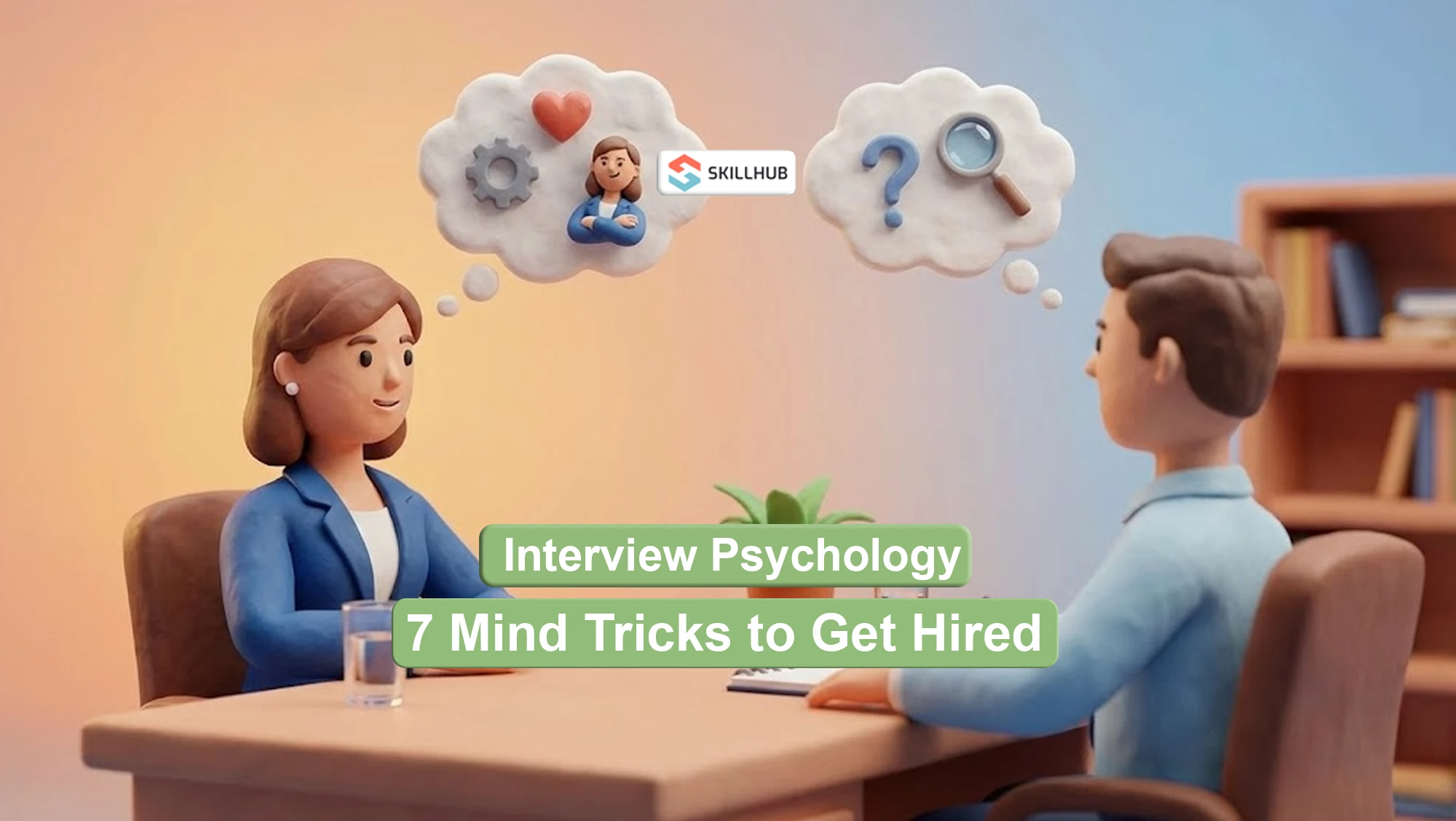
Most candidates prepare for interviews by memorizing facts. They rehearse their resume, they study the company's "About Us" page, and they practice their answers to standard technical questions. They treat the interview like an oral exam where the goal is to get the answers "right."
This is a mistake. An interview is not an exam; it is a psychological interaction.
Hiring managers are not robots evaluating data points. They are irrational, emotional humans subject to cognitive biases. They make snap judgments based on "vibes," body language, and subconscious signals. Research shows that many interviewers decide whether to hire someone within the first 5 minutes, and spend the next 25 minutes simply validating that decision.
To win the job, you don't just need to be qualified; you need to be liked. You need to be memorable. You need to master the subtle art of influence.
We have compiled 7 psychological strategies colloquially known as "Jedi Mind Tricks" that can help you hack the interviewer's brain, build instant rapport, and position yourself as the only logical choice for the role.
1. The Chameleon Effect (Mirroring)
The Psychology: Humans are tribal. We subconsciously trust people who are "like us." The Chameleon Effect is a phenomenon where people mimic the body language, speech patterns, and energy levels of the person they are interacting with to build social cohesion.
The Hack: Don't just sit there; mirror the interviewer.
- Posture: If they lean forward to engage, you lean forward. If they sit back and are relaxed, don't sit on the edge of your chair like a terrified squirrel; sit back and relax too.
- Vocabulary: Listen to their specific words. Do they say "clients" or "customers"? "Revenue" or "Sales"? "Challenges" or "Blockers"? Adopt their lexicon. When you speak their language, you subtly signal, "I am already one of you."
- Energy: If they are high-energy and fast-paced, match it. If they are thoughtful and slow, slow down.
Warning: Be subtle. If you copy them exactly, it looks like mockery. Aim for a 3-second delay.
2. The Benjamin Franklin Effect (Asking for Advice)
The Psychology: We assume that we do favors for people we like. But psychology tells us the reverse is also true: we like people we do favors for. Benjamin Franklin famously won over a rival legislator by asking to borrow a rare book. The rival felt flattered, granted the favor, and their relationship thawed.
The Hack: Turn the interrogation into a mentorship moment. Instead of just answering questions, ask the interviewer for their opinion or advice.
- "I saw that you led the transition to Agile last year. Based on your experience, what is the one piece of advice you would give to someone joining the team at this specific stage?"
By asking for their wisdom, you validate their expertise. It makes them feel smart, and by extension, they feel good about you. This transforms the dynamic from "Judge vs. Defendant" to "Mentor vs. Protege."
3. The Primacy and Recency Effect (The Sandwich)
The Psychology: The human brain remembers the beginning (Primacy) and the end (Recency) of an event far better than the middle. The middle is a blur.
The Hack: You must win the first 2 minutes and the last 2 minutes.
- The Start: Don't start with boring logistics. Start with warmth. Smile, make eye contact, and engage in genuine small talk. Studies show that candidates who establish "warmth" before "competence" are hired more often.
- The End: Do not end with "I have no questions." That is the kiss of death. End with a "power question" that leaves a lasting impression of strategic thinking.
- Resource: Check our guide on strategic questions to ask in an interview to ensure you nail the "Recency" moment.
4. The "Future Pace" (Using the word "We")
The Psychology: Future Pacing is a technique used in sales and hypnosis where you ask the subject to imagine a future scenario where the desired outcome has already happened. It plants a mental image of success.
The Hack: Shift your language from "If I get the job" to "When we work together."
- Weak: "If you hire me, I would analyze the data like this."
- Strong: "Once we start this project, my first step would be to sit down with the product team so we can align on the KPIs."
By using "We," you are linguistically placing yourself on the team. You are forcing the interviewer to visualize you in the role. It makes the offer feel like the natural next step, rather than a decision to be made.
5. The Power of Silence (Confidence Signaling)
The Psychology: Nervous people fear silence. They fill every gap with "um," "uh," or rambling sentences. Confident people are comfortable with silence. In negotiation and status dynamics, the person who is most comfortable with silence usually holds the power.
The Hack: When asked a difficult question (like one of the tough behavioral interview questions), do not answer immediately.
- Pause.
- Take a breath.
- Think for 3 seconds.
- Then speak.
This pause signals high status. It shows you are thoughtful, not reactive. It implies that you respect the question enough to consider it. Furthermore, stopping talking immediately after you have made your point is a sign of executive presence. Do not ramble into irrelevance.
6. Framing Weaknesses as Strengths (Reframing)
The Psychology: Every hiring manager looks for red flags. They want to know what is wrong with you. The "Framing Effect" is a cognitive bias where people react to a particular choice in different ways depending on how it is presented.
The Hack: Never deny a weakness; reframe the context.
- The Trap: "You don't have experience in this industry."
- The Reframe: "That is exactly why I’m an asset. Because I’m coming from [Industry X], I don't have the standard blind spots. I can look at your problems with a fresh set of eyes and apply cross-pollinated solutions that your competitors aren't thinking of."
You are not apologizing for your background; you are selling it as a unique feature. This requires strong soft skills in communication and persuasion.
7. Anchoring (The Salary Trick)
The Psychology: Anchoring is the tendency to rely too heavily on the first piece of information offered (the "anchor") when making decisions. In salary negotiations, the first number spoken sets the playing field.
The Hack: If pressed to give a number, do not give a specific figure. Give a "bracketed range" where the bottom of your range is actually your target number.
- Goal: You want $100k.
- The Anchor: "I’m looking for roles in the $100k - $120k range, depending on the full benefits package."
By saying "$120k," you have anchored their brain high. $100k now seems "cheap" or "reasonable" by comparison. If you had said "$90k - $100k," then $100k would seem expensive.
- Resource: Use our salary negotiation scripts to master this delicate conversation without seeming aggressive.
%20(1).png)
The "Black Hat" Warning: Don't Be Creepy
There is a fine line between influence and manipulation. These "Jedi Mind Tricks" work because they help build genuine connection and reduce friction. If you use them robotically or with malicious intent, people will sense it.
- Don't mirror someone so aggressively it looks like a game.
- Don't use the "Future Pace" if you clearly aren't qualified.
- Don't use silence to intimidate.
The goal is Emotional Intelligence (EQ). High-EQ candidates naturally do many of these things. They read the room, they listen, and they adapt.
Conclusion: You Are Selling Certainty
At the end of the day, hiring managers are scared. They are scared of making a bad hire, wasting money, and looking foolish to their boss. Employee background verification can also help employers reduce hiring risks by validating important candidate information before making a final decision.
Your job in the interview is not just to prove you can code or sell or design. Your job is to reduce their fear. By using these psychological strategies, you are sending a subconscious message: "I am safe. I am like you. We are going to do great work together."
That feeling of safety of certainty is what gets you hired.
Ready to test these tactics in the real world? Before you get to the interview, you need a resume that opens the door. Consult with a Skillhub Career Expert today to ensure your application materials are as psychologically persuasive as your interview skills.


%20(1).webp)