Fake It Until You Make It? The Rise of Deepfakes and AI Voiceovers in Remote Interviews
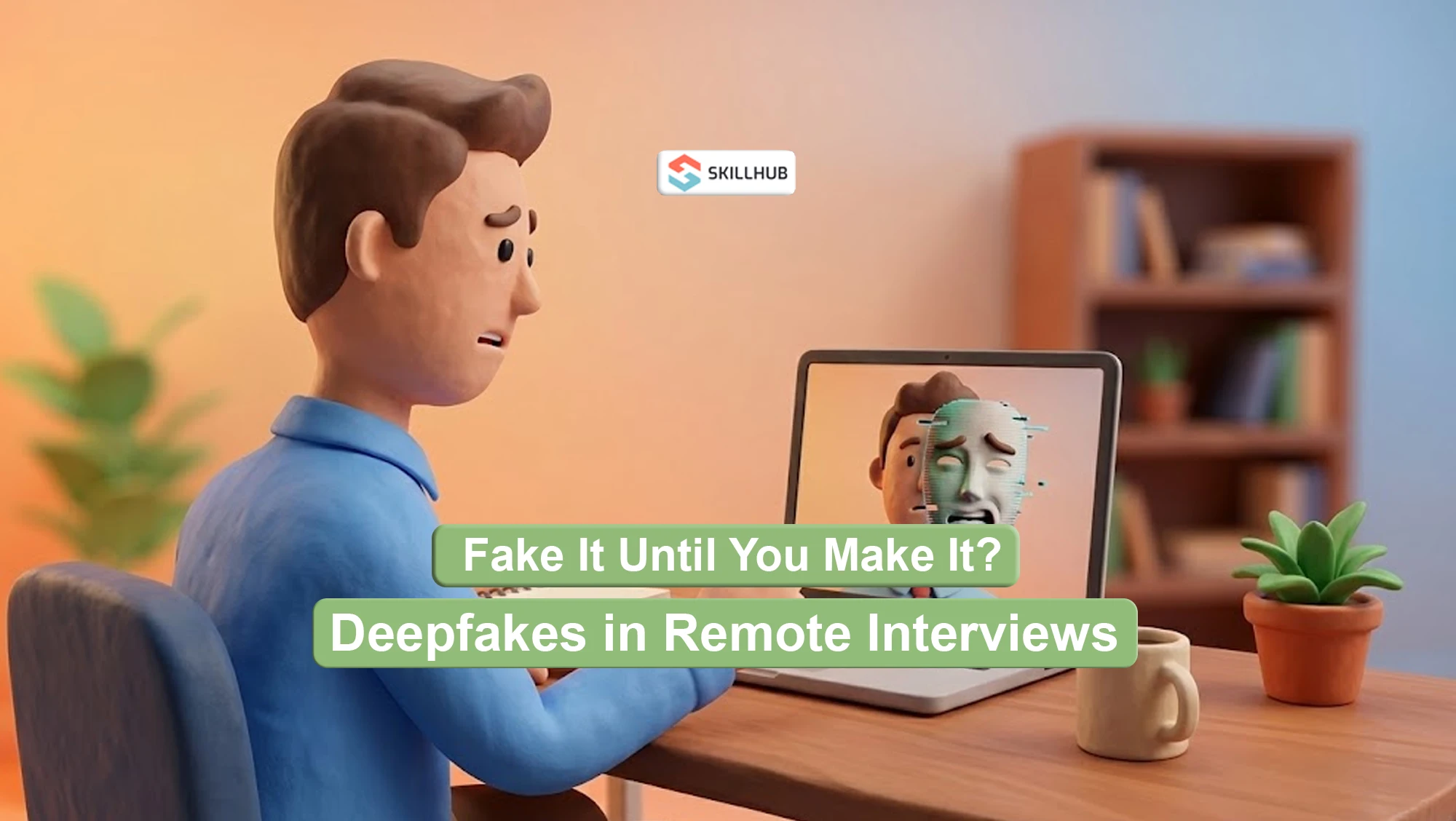
The remote job interview has always felt a little impersonal. You are talking to a pixelated face on a screen, separated by miles of fiber optic cable. But recently, hiring managers have noticed something unsettling. The candidate’s lips don't quite sync with their words. Their eyes seem to be scanning invisible text. Or, in the most extreme cases, the person on the screen sneezes, but the face doesn't move.
Welcome to the new frontier of employment fraud: The Deepfake Interview.
Desperate to land high-paying remote tech jobs, a growing shadow market of candidates is turning to Hollywood-level special effects and military-grade AI tools to cheat the system. We are not talking about reading notes off a sticky note. We are talking about real-time face-swapping, AI voiceovers, and "Cyrano de Bergerac" schemes where a senior engineer answers questions while the candidate simply moves their mouth.
The FBI has issued warnings. Companies are panicked. And honest candidates are asking: "Am I competing against robots?" This investigation dives into the dark world of AI interview fraud, how it works, and why "faking it" might end your career before it begins.
The Toolkit: How Candidates Are Cheating
To understand the threat, we must understand the technology. The tools available for "interview hacking" have evolved from crude tricks to sophisticated software suites that cost less than a Netflix subscription.
1. The "AI Teleprompter" (The Co-Pilot)
This is the most common and "mild" form of cheating. Candidates run an app (like a modified version of Otter.ai or a custom ChatGPT wrapper) that listens to the interviewer's audio in real-time.
- How it works: The interviewer asks, "How would you handle a database migration failure?" The AI transcribes the question, feeds it to an LLM, and instantly generates a perfect answer on the candidate's screen.
- The "Tell": The candidate has "dead eyes." They are reading, not thinking. Their answer sounds Wikipedia-perfect but lacks personal anecdote or nuance.
2. The "Cyrano" (The Proxy Interview)
In this scenario, the person on the screen is the candidate, but the person speaking is someone else entirely usually a paid expert.
- How it works: The candidate wears a tiny earpiece. A senior engineer (often hired from a "proxy interview farm") is on the call, hidden. When the question is asked, the expert answers. The candidate lip-syncs the response.
- The "Tell": Audio lag (latency). If the candidate's mouth moves 500ms after the sound, it's a red flag. Also, if asked to "wave your hand in front of your face," the video compression often glitches, revealing the trick.
3. The Full Deepfake (Identity Theft)
This is the most dangerous tier, linked by the US Department of Justice to North Korean IT workers attempting to infiltrate Western companies.
- How it works: The person on camera uses software like DeepFaceLive to overlay a generated face (or a stolen identity) onto their own. They might look like a 30-year-old woman from Ohio, but they are actually a male operative overseas.
- The Goal: To bypass background checks and gain access to corporate IT systems.
Why Is This Happening Now?
Three factors have created the perfect storm for this fraud.
1. The "Overemployment" Movement: There is a massive trend of remote workers trying to hold 2, 3, or even 4 full-time jobs simultaneously. Since they can't be in four places at once, they use AI tools to automate their presence and delegate the actual work, often outsourcing it to cheaper labor.
2. The Desperation of the Tech Market: With layoffs hitting the tech sector, competition is fierce. Some candidates feel that since "everyone else is using AI," they must cheat to level the playing field.
3. The Accessibility of Tools: Two years ago, real-time deepfakes required a powerful gaming PC and coding skills. Today, you can download a plugin for Zoom or OBS (Open Broadcaster Software) that does it with one click.
The Recruiter's Counter-Attack: The "Blade Runner" Test
Hiring managers are not sitting idly by. They are developing “Voight-Kampff” tests to distinguish humans from replicants, while AI detection tools can help identify deepfake videos, synthetic voices, and other signs of manipulated interview content. If you are a legitimate candidate, you need to know these tests so you don't accidentally trigger a false alarm.
1. The "Physical Reality" Check
Recruiters are now asking candidates to perform physical actions that break simple AI filters. They may also use an AI image detector to check profile photos or captured video frames for signs of AI generation or manipulation.
- "Can you please turn your head to the side profile?" (2D face filters often fail at 90-degree angles).
- "Please hold up your ID to the camera next to your face." (Deepfakes struggle to handle objects passing in front of the generated face).
2. The "Un-Googleable" Question
To defeat the AI Teleprompters, interviewers are moving away from technical trivia ("What is a REST API?") to complex behavioral interview questions that require personal storytelling.
- Example: "Tell me about a time you failed and how it felt emotionally." An AI can describe failure, but it struggles to describe the feeling of failure convincingly in real-time.
3. Identity Verification Platforms
Companies are implementing tools like ClearForce or ID.me before the interview begins. You may be asked to scan a biometric ID and perform a "liveness check" on your smartphone before you are allowed into the Zoom room.
%20(1).png)
The Risks: It’s Not Just "Cheating," It’s Fraud
Many candidates view this as a "grey area" or a "hack." It is not. It is fraud.
1. Legal Consequences: If you sign an employment contract under a false identity or using false credentials, you are committing wire fraud. In the US, companies are beginning to sue "ghost employees" to recover wages paid.
2. The Blacklist: Recruiting agencies share data. If you are caught using a proxy interviewer, your name (and your real face) will be added to internal "Do Not Hire" lists. You won't just lose that job; you will be radioactive to technology recruiting firms across the industry.
3. The "Day One" Disaster: Let’s say you succeed. You use an AI script to pass the coding interview. You get the job.
- Day 1: You are given a ticket to fix a bug in a legacy codebase.
- The Result: You can't do it. You don't actually have the skills. You are fired within the week (the "probation cliff"), but now you have a firing on your record and a reputation as a fraud.
Where is the Line? (Using Notes vs. Cheating)
Is it wrong to use any help? No. It is perfectly acceptable to have bullet points on your screen or a copy of your resume open. That is preparation.
- Preparation: Having a list of your technical skills open so you don't forget to mention Python.
- Cheating: Having ChatGPT generate the sentence about Python and reading it verbatim.
The difference is cognitive load. Are you doing the thinking, or is the machine? Employers pay for your brain, not your subscription to OpenAI.
Conclusion: Authenticity is the Ultimate Competitive Advantage
In a world where digital reality is becoming fluid, authenticity is becoming a premium asset. When a recruiter sees a candidate who is nervous, who pauses to think, who admits "I don't know, but here is how I would find out" that signals humanity.
Don't let the fear of competition drive you to the dark side. The short-term gain of "faking it" is not worth the long-term cost of your integrity. Instead of investing in deepfake software, invest in polishing your actual skills and presentation.
A genuine candidate with a strong IT resume and the ability to connect emotionally will always beat a polished fake. The truth has a resonance that AI cannot simulate.
Worried that your honest resume isn't getting noticed? You don't need to cheat; you just need better marketing. Consult with a Skillhub Career Expert to highlight your real achievements effectively.


%20(1).webp)