The Secret World of 'Overemployment': How People Work Two Remote Jobs Without Getting Caught
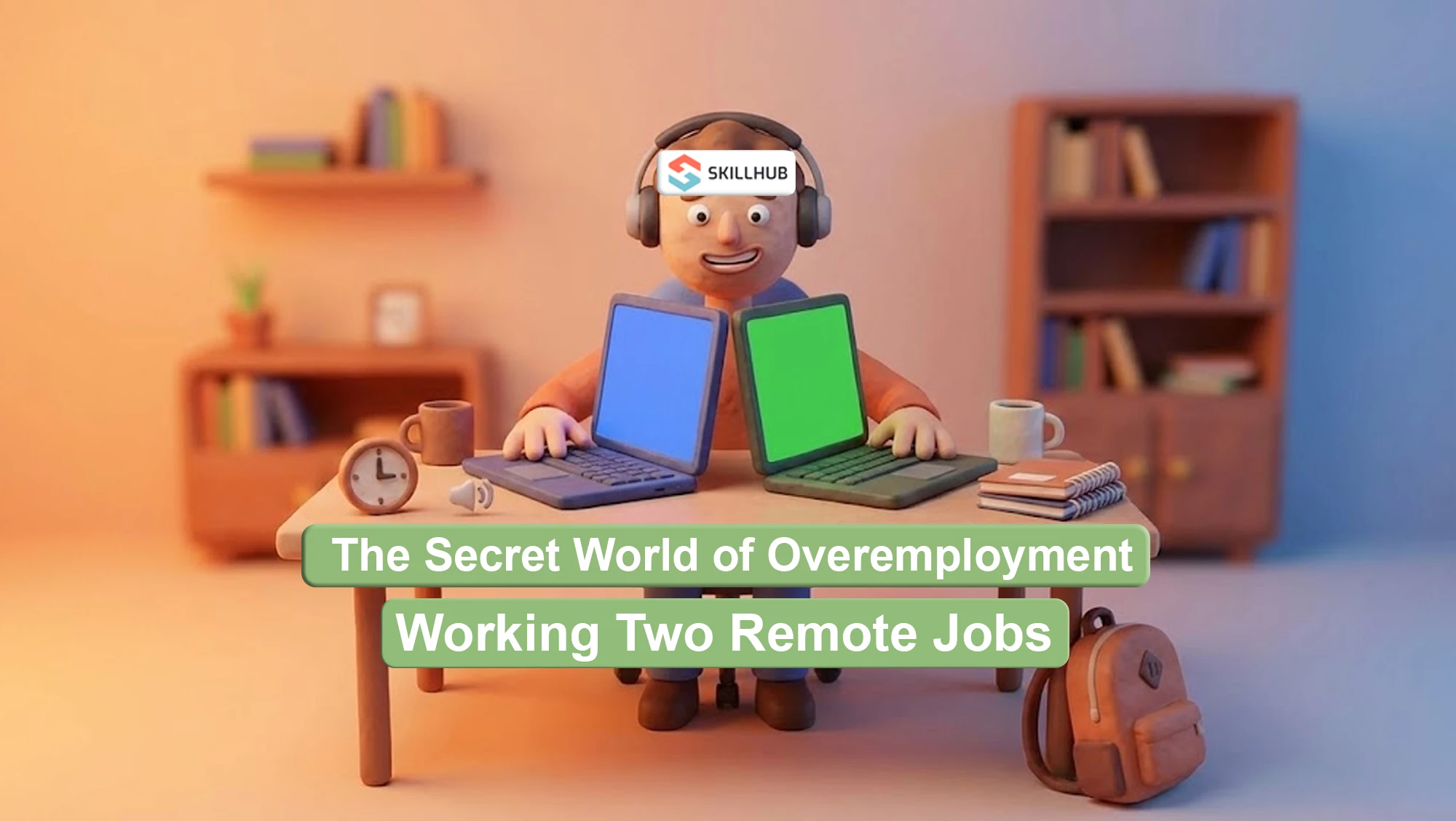
In the shadows of the post-pandemic workforce, a new class of professional has emerged. They don't have side hustles. They don't drive Uber on weekends. Instead, they log into their corporate laptop at 9:00 AM for "Job 1," and five minutes later, they log into a second corporate laptop for "Job 2."
They are the "Overemployed."
Their goal is simple: Financial Independence, Retire Early (FIRE). By secretly holding two (or sometimes three) full-time remote roles simultaneously, they are doubling their income, paying off mortgages in months, and stacking cash at a rate that traditional career climbing simply cannot match.
But this is not just about working hard. It is a high-stakes game of corporate espionage, requiring a complex setup of hardware, strict calendar management, and a mercenary mindset that views employment as a subscription service rather than a loyalty pact.
For HR departments, it is a nightmare. For the workers, it is a revolution. Here is a deep dive into how they do it, the technology that powers it, and the catastrophic risks of getting caught.
The Philosophy: "Two Mediocre Jobs > One Great Job"
The core tenet of the Overemployment (OE) community is counter-intuitive to everything we are taught about careers. Usually, we strive to be "top performers." We want promotions, recognition, and equity.
The Overemployed reject this. They argue that the reward for good work is simply more work. Therefore, the strategy is to be "average."
- The Goal: Do exactly enough to not get fired, but not enough to get promoted. Promotions bring scrutiny and meetings. OE requires invisibility.
- The Math: A "High Performer" at a tech company might get a 5% raise and a $10k bonus. An "Average Performer" who takes a second job gets a 100% raise instantly.
This shift in mindset from climbing the ladder to owning the ladder is what drives the movement. It is a direct response to the future of work, where loyalty is often unrequited.
The Setup: How They Pull It Off (The Mechanics)
You cannot work two jobs on one computer. That is Rule #1. The Overemployed utilize a hardware setup that resembles a small NASA control center to keep their worlds separate.
1. The Hardware Firewall (KVM Switches)
Mixing data is the fastest way to get sued. OE workers use completely separate setups.
- Laptops: One for Job 1 (J1), one for Job 2 (J2). Never the twain shall meet.
- KVM Switch: A device that allows them to use one keyboard and mouse to control two different computers, switching between them with a button press.
2. The "Mouse Jiggler" (Defeating Bossware)
Many remote companies use surveillance software ("bossware") that tracks mouse movement to ensure an employee is "active." If you are working on J1, your J2 computer goes idle.
- The Solution: Mechanical mouse jigglers. These are physical devices (not software, which IT can detect) that physically nudge the mouse every few minutes, keeping the "Teams" status green.
3. Calendar Tetris (The Art of Scheduling)
The biggest risk is the "Double Meeting" being required to be on two Zoom calls at the exact same time.
- The Block: OE workers aggressively block out their calendars with "Focus Time" or fake meetings to prevent overlap.
- The Excuse: If a conflict is unavoidable, they use a rotation of excuses: "My internet is unstable," "I have a conflict with a client," or "I need to drop for a bio-break."
- The Dual Audio: In extreme cases, they wear two earbuds (one for each meeting), listening to both simultaneously, speaking only when addressed. This requires a level of technical skills and multitasking that borders on cognitive overload.
The "Hibernation": Killing Your Digital Footprint
To be Overemployed, you must be a ghost. The first casualty of OE is your ego, and the second is your LinkedIn profile.
You cannot announce "I started a new job at Google!" if you are secretly still employed at Amazon. This creates a massive problem for career branding.
The LinkedIn Strategy:
- Hibernate: Many OE workers deactivate LinkedIn entirely.
- The "Consultant" Shield: They list their current role as "Self-Employed Consultant" or "Stealth Startup."
- Lagging Updates: They simply never update their profile. To the world, they still work at the job they left three years ago.
This contradicts standard advice on LinkedIn summary examples, which usually encourage visibility. For OE, visibility is death.
%20(1).png)
The Risks: What Happens When You Get Caught?
The rewards are high (double salary), but the risks are severe. It is not illegal to have two jobs in the US (unless you are a government employee or have a specific non-compete contract), but it is almost always a fireable offense.
1. "The Work Number" and Background Checks
The biggest enemy of the Overemployed is a database owned by Equifax called "The Work Number."
- What it is: A massive database where huge payroll providers (ADP, Workday) automatically report your employment dates and salary.
- The Leak: When you apply for J2, the background check company pulls your report. If you didn't freeze your data, they will see that you are currently employed at J1 and have not resigned. Game over.
2. Time Theft and Legal Action
While rare, companies can sue for "Time Theft" or "Fraud" if they can prove you were billing hours to them while working for someone else. This is especially dangerous if you are a contractor billing hourly.
3. Conflict of Interest
Working for Coke and Pepsi at the same time is a lawsuit waiting to happen. Most smart OE workers choose jobs in different industries (e.g., J1 in Healthcare, J2 in FinTech) to avoid IP theft accusations.
4. Burnout (The Human Cost)
The mental load of living a double life is crushing. You are constantly looking over your shoulder. You are constantly lying to your boss and your team.
- The Crash: Many who attempt OE quit within 3 months because the stress outweighs the money. It requires hard skills in time management that few possess.
The Ethics: Is It Wrong?
This is the great debate of 2026.
The Corporate View: "We pay for 40 hours of your attention. If you are working elsewhere, you are stealing from us."
The Worker View: "You pay for my output, not my time. If I finish my tasks in 2 hours, why should I be punished with busy work? If I can do the job to your satisfaction, what I do with the rest of my time is my business."
This friction highlights a fundamental shift in the employer-employee social contract. Workers watched companies conduct mass layoffs via Zoom while posting record profits. The response was a mercenary detachment: "If you can fire me without notice, I can work for your competitor without notice."
The Verdict: A Strategy for the Few
Overemployment is not a sustainable career path for 99% of people. It is a short-term "sprint" to pay off debt or save for a house. It blocks you from climbing the corporate ladder (you can't be a VP and have a second job).
However, it has exposed a truth about the modern office: most knowledge work does not take 40 hours a week. It takes 15 hours of work and 25 hours of meetings and pretending to look busy.
Whether you condemn it or envy it, the Overemployed have proven one thing: the traditional 9-to-5 model is broken, and some people are hacking the system to fix it for themselves.
If you are considering this path, or just want to land one really good high-paying job, you need a resume that stands out. Consult with a Skillhub Career Expert to build a strategy that works for your specific goals whether that's one job, or two.



%20(1).webp)