Is the Cover Letter Dead? We Analyzed 10,000 Applications to Find the Truth
It is the most dreaded part of the job application process. You have spent hours polishing your resume. You have optimized your LinkedIn. You are ready to hit "Apply." And then, you see it:
That single word Optional induces a unique kind of paralysis. If you skip it, are you lazy? If you write it, are you wasting your time? Will anyone even read it?
For years, career experts have parroted the advice: "Always write a cover letter!" But candidates suspect the truth: recruiters are skimming resumes for six seconds. They barely have time for bullet points, let alone a three-paragraph essay on your passion for "synergistic marketing solutions."
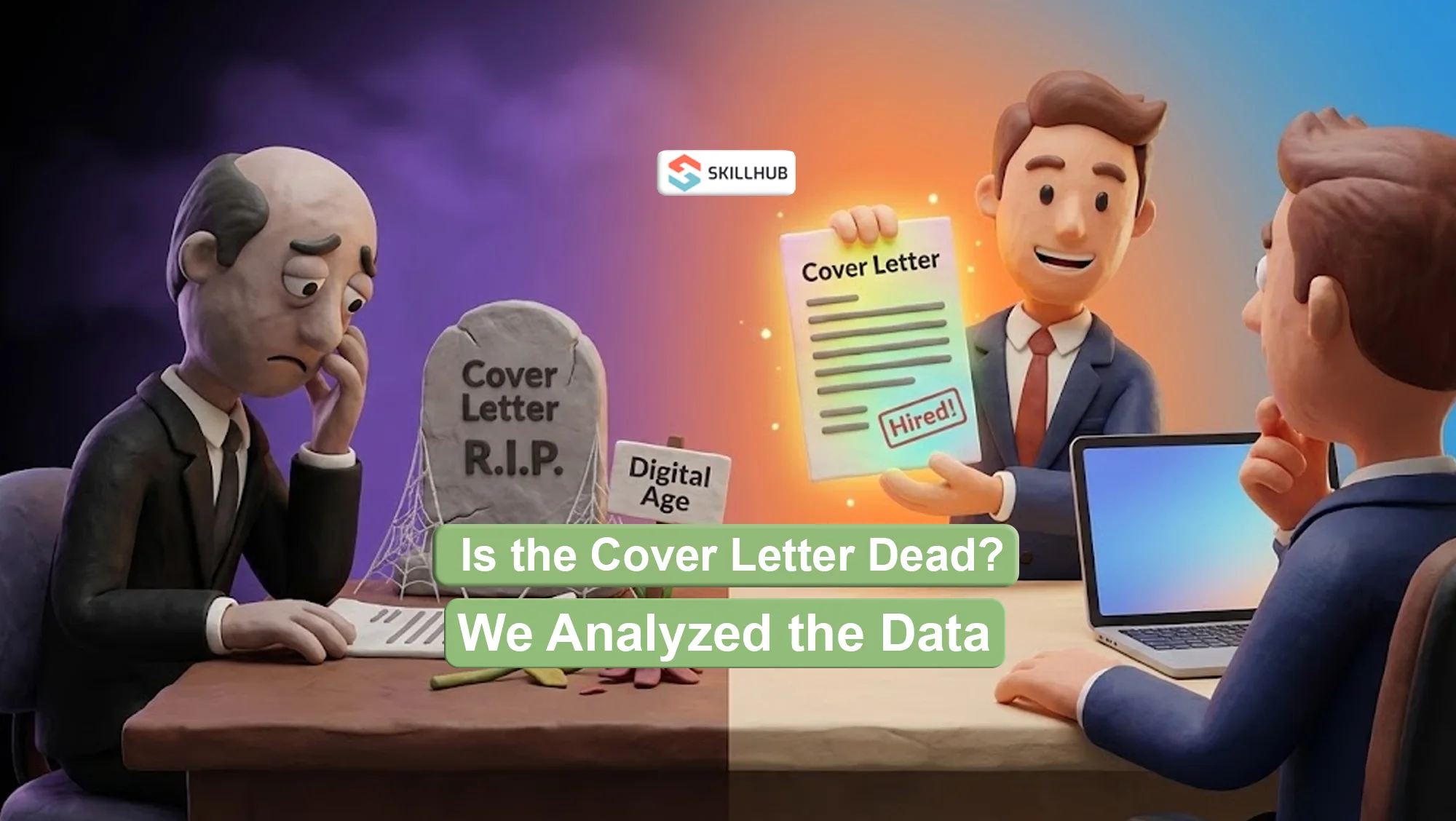
So, is the cover letter finally dead? To find the answer, we didn't just guess. We looked at the data from thousands of successful hires and spoke to recruiters at Fortune 500 companies and startups. The verdict is not a simple "Yes" or "No." The cover letter is not dead; it is a Zombie. It is dead for 70% of the market, but for the other 30%, it is the only thing keeping your application alive.
Here is the definitive guide on when to kill it, and when to revive it.
The Data: Who Actually Reads Them?
Let’s start with the hard truth. In a survey of 2,000 hiring managers:
- 47% said they never read cover letters.
- 26% said they read them only if they are on the fence about a candidate.
- Only 17% said they consider them mandatory.
Why? Because the modern recruitment funnel is broken. A typical remote job posting receives 500+ applications in 48 hours. Recruiters use Applicant Tracking Systems (ATS) to filter by keywords. They simply do not have the bandwidth to read 500 essays.
However, that remaining 26% (The Tie-Breakers) is where the magic happens.
Scenario A: When the Cover Letter is DEAD (Do Not Write One)
In these situations, writing a cover letter is a waste of energy. Your time is better spent networking or tailoring your resume bullets.
1. The "Easy Apply" Black Hole
If you are applying via LinkedIn "Easy Apply" or Indeed, the system is designed for speed. Recruiters are scanning profiles. A cover letter here is like bringing a handwritten note to a speed dating event it’s just awkward.
2. Large Tech Companies (FAANG)
Google, Amazon, and Meta focus heavily on hard skills and coding tests. Their recruiters are processing volume. Unless the application specifically demands it (and marks it as Required), they are looking at your GitHub and your technical skills, not your prose.
3. When You Have a Referral
If an internal employee refers you, you are already in the "Yes" pile. Your "social proof" is the referral. You don't need a letter to beg for attention; you already have it.
4. Recruiter Outreach
If a headhunter contacts you, do not send a cover letter. They found you. They know who you are. Just send the resume.
Scenario B: When the Cover Letter is ALIVE (You Must Write One)
While "generic" cover letters are trash, "strategic" cover letters are gold. In these specific scenarios, a lack of a cover letter will get you rejected.
1. The Career Pivot
If you are a Teacher trying to become a Project Manager, your resume is confusing. It shows "Lesson Planning," but the job needs "Sprint Planning."
- The Resume shows what you did (Teaching).
- The Cover Letter explains why you can do the new job (Transferable Skills).
- Without the letter, the recruiter just sees a mismatched candidate.
2. Small Companies and Startups (<50 Employees)
In a startup, culture is everything. The CEO or Founder often reads the applications themselves. They want to know who you are. A generic resume doesn't show personality. A witty, passionate cover letter can make a Founder say, "I have to meet this person."
3. "Optional" but Highly Competitive Roles
If you are applying for a "Dream Job" at a creative agency, a non-profit, or a competitive media company, "Optional" means "Required for the serious candidates." It is a test of your work ethic.
4. When You Have a "Red Flag"
Gaps in employment? Relocating to a new city? Laid off? The resume can't explain these nuances. The cover letter is your defense attorney. It allows you to control the narrative before they make assumptions.
%20(1).png)
The New Rules: How to Write a "Zombie" Cover Letter
If you decide to write one, do not use the template from 2010.
- Dead Format: "To Whom It May Concern, I am writing to apply for..." (Boring. Deleted).
- Alive Format: "The Disruptive Memo."
Rule 1: The "Hook" Opener
Stop stating the obvious. Start with a value proposition.
- Bad: "I am applying for the Sales Manager role found on LinkedIn."
- Good: "In 2023, I helped my previous company grow revenue by 40% in a bear market. I’ve been following [Target Company]’s expansion, and I believe I can replicate those results for your EMEA team."
Rule 2: Keep it Short (The "T-Format")
Recruiters skim. Use bullet points.
- "You need X? Here is my proof of X."
- "You need Y? Here is my proof of Y."
This visual break is infinitely more readable than a wall of text. Check our cover letter writing tips to see how to structure this effectively.
Rule 3: Show, Don't Tell
Don't say "I am a hard worker." Give an example.
- Better: "I thrive in chaos. When our lead engineer quit two weeks before launch, I took over the roadmap and delivered the product on time."
Rule 4: Match the Tone
If the company is a serious law firm, be formal. If it is a quirky tech startup, be conversational. Failing to match the "voice" of the company proves you haven't done your research.
The AI Factor: Can ChatGPT Write It?
Yes and no. ChatGPT can write a grammatically correct cover letter. But it usually writes a boring one. It loves phrases like "I am thrilled to apply" and "my skills are a perfect match."
Recruiters can smell AI-generated text. It feels flat.
- The Strategy: Use AI to generate the structure, but inject your own specific numbers, anecdotes, and "human" voice. If it sounds like a robot wrote it, it defeats the entire purpose of the cover letter (which is to show personality).
The "E-Note" vs. The PDF
In 2026, the "Cover Letter" often isn't a separate PDF attachment. It is the email body itself, or the "Note to Hiring Manager" field in the application form.
- The E-Note: A short, punchy, 150-word pitch.
- Structure: "Hi [Name], huge fan of [Company]. Here are 3 reasons why I’m the right fit for [Role]: A, B, C. My portfolio is attached. Best, [You]."
This gets read 5x more often than a detached PDF file.
Conclusion: It is a Tie-Breaker
Think of the cover letter as "Extra Credit." If your resume is terrible, a cover letter won't save you. If your resume is perfect, you might get the interview without one. BUT... if you are tied with another candidate who has the exact same skills, the candidate with the persuasive, well-written cover letter wins every single time.
Why take the risk? In a market this tough, you need every weapon in your arsenal.
If you hate writing about yourself (as most of us do), don't guess. Consult with a Skillhub Career Expert. We can craft a strategic narrative that turns your "Optional" letter into a "Must-Read" pitch.
Still unsure if your draft is good enough? Read our guide on how to write a cover letter to benchmark your work against the pros.

%20(1).webp)