Laid Off vs Fired: The Brutal Truth About Losing Your Job
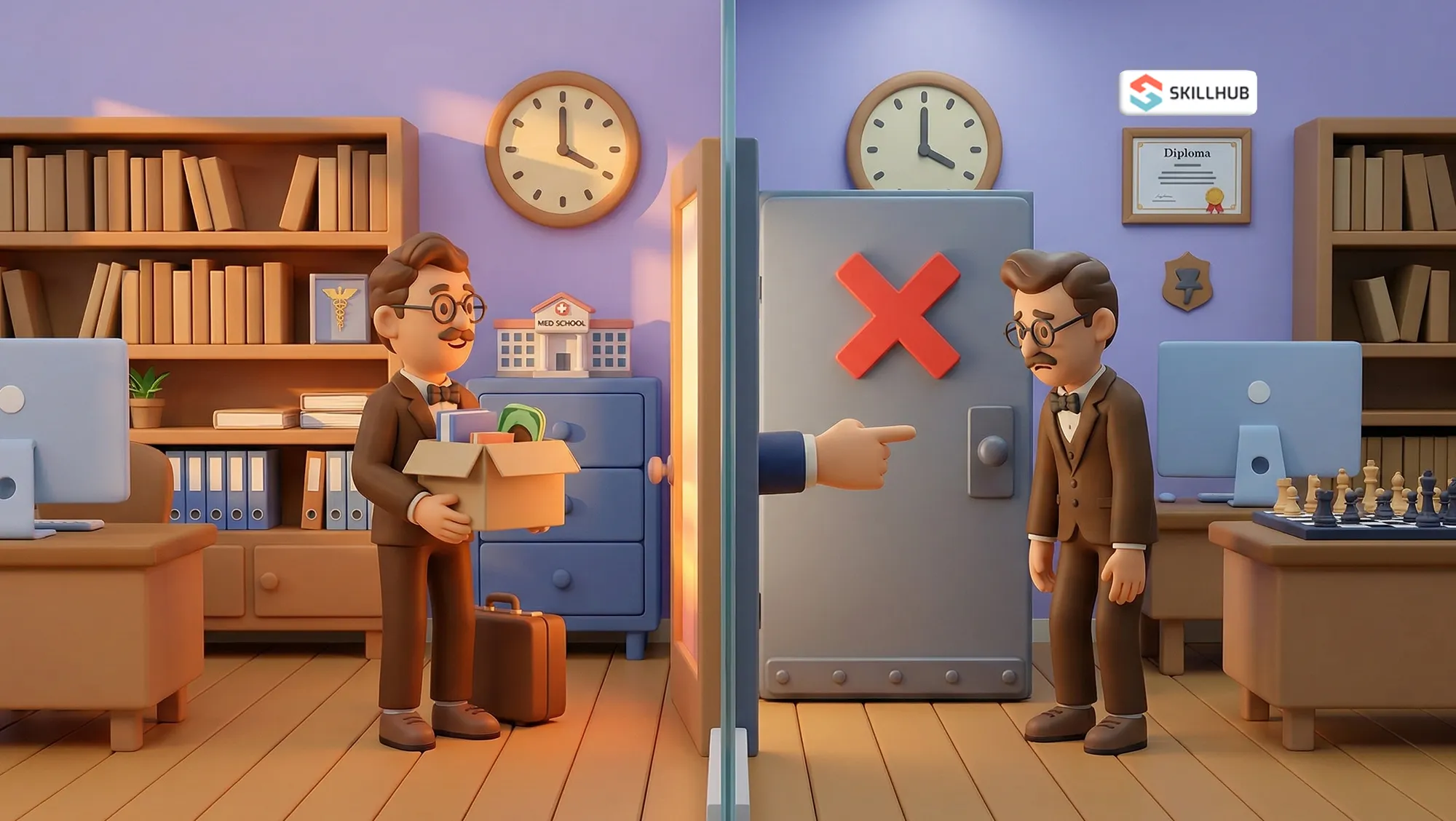
You get an unexpected calendar invite for 4:00 PM on a Friday. The only attendees are your manager and someone from Human Resources.
You sit down. The HR representative looks at you with a perfectly neutral expression and hands you a folder. They start talking about "transitions," "corporate restructuring," and "parting ways." Your brain goes numb. The only thing you actually comprehend is that you no longer have a job.
When the initial panic subsides, the questions start flooding in. Was it my fault? What do I tell my family? What do I tell my next employer? And most importantly: What is the difference between laid off and fired? People use these terms interchangeably in casual conversation. Your friends might say, "Man, I got fired today," when they actually meant their entire department was eliminated. But in the eyes of the law, the government, and your future hiring managers, confusing these two concepts is a massive mistake.
Here is the unfiltered truth about what happens when you get laid off, what it actually means to be fired, and the exact scripts you need to explain your sudden unemployment to future employers without destroying your reputation.
What Does It Mean to Get Laid Off? (The Business Decision)
Let’s completely remove your ego from the equation for a second.
When we talk about the laid off definition, it comes down to a cold, hard spreadsheet. Getting laid off has absolutely nothing to do with your talent, your work ethic, or how many late nights you spent grinding out reports for your boss.
So, what does getting laid off mean? It means the company ran out of money, ran out of work, or fundamentally changed its business strategy, making your specific role completely unnecessary.
You did not fail the company. The company failed to build a sustainable business model that could support your salary.
Common triggers for layoffs include:
- Mergers and Acquisitions: Company A buys Company B. Now they have two Directors of Marketing. They only need one. Someone gets a severance package.
- Economic Downturns: A recession hits. Clients pull their budgets. The agency has to cut 20% of its workforce just to keep the lights on.
- Strategic Pivots: A tech company decides to stop building hardware and pivot entirely to software. The entire hardware engineering team is suddenly laid off from work.
- Outsourcing: The company realizes they can pay an overseas agency a fraction of what they pay your local department.
If you are frantically googling got laid off meaning because you feel a deep sense of personal shame, stop. It is a mathematical business decision. It is an incredibly common part of the modern corporate lifecycle.
What Does Fired Mean in a Job? (The Performance Decision)
If a layoff is about the company's failures, being fired is entirely about yours.
The fired from job meaning is rooted in "cause." A company fires you because your specific behavior, performance, or actions actively harmed the business or violated their policies. You were removed because of something you did (or failed to do).
What does it mean to be fired? It usually falls into two categories:
1. Termination for Cause (The Fast Way)
This happens when you break a major rule. If you steal company property, harass a coworker, leak confidential data to a competitor, or continually show up to work intoxicated, you are fired immediately. There is no warning. You are escorted out of the building.
2. Performance-Based Firing (The Slow Way)
This is the agonizing, slow-motion trainwreck. You consistently miss your sales quotas. You make critical errors in your code. Your manager puts you on a Performance Improvement Plan (PIP). They give you 30 days to fix your metrics. You fail to hit the metrics. You are fired.
When you look at fire vs layoff, the distinction is clear. A layoff means the job disappeared. Firing means the job still exists, but the company explicitly does not want you doing it anymore.
Layoff vs Fired: The Ultimate Breakdown
Is being laid off the same as being fired? Absolutely not. To make the difference crystal clear, let's look at how the two events compare across the four most important categories of your professional life.
The Money: Fired vs Laid Off Severance and Benefits
This is where the difference between laid off and fired hits your bank account.
Severance Packages
When you are laid off, companies usually offer a severance package. They do this to protect themselves from lawsuits and to maintain a positive public image. A standard package might offer one or two weeks of base pay for every year you worked at the company, plus a continuation of your health insurance (COBRA) for a few months.
If you are fired for cause, you get nothing. The company hands you your final paycheck for the hours you already worked, and they show you the door. There is no golden parachute for someone who was terminated for breaking company policy.
Unemployment Benefits
Does layoff mean fired when you apply for state unemployment? No.
Unemployment insurance is specifically designed for people who lost their jobs through no fault of their own. If you were laid off, you are almost universally approved for unemployment benefits while you look for a new job.
If you were fired, the situation gets muddy. If you were fired for gross misconduct (like stealing), the state will deny your unemployment claim. If you were simply fired because you were bad at the job—meaning you tried your best, but you just couldn't hit the targets—you can sometimes still collect unemployment. The company might fight your claim, but incompetence is not always considered "misconduct" by the state.
How to Explain Losing Your Job in an Interview
Eventually, you have to get back into the arena. You have to sit across from a hiring manager and explain why you left your last position.
This is the moment that terrifies candidates. They worry that saying the wrong thing will instantly disqualify them. The strategy you use depends entirely on the reality of your exit.
Script 1: How to Explain Getting Laid Off
Because a layoff carries almost zero professional stigma, you can be entirely honest and brief. Do not act ashamed. State the facts, pivot to the future, and move on.
"My previous company lost a major round of funding in Q3, which resulted in them eliminating 20% of the workforce, including my entire marketing department. It was an unfortunate situation, but I am proud of the campaigns I built there, and I am now looking for an opportunity to bring those lead-generation skills to a more stable, growing team like yours."
Script 2: How to Explain Being Fired
This is the hardest conversation in corporate America. If you lie and say you quit, the recruiter might call your former employer to verify, catch you in a lie, and blacklist you. You have to tell the truth, but you have to spin it as a massive learning experience.
You need to take ownership. Never, ever trash-talk your former boss. If you sit in an interview and complain that your old manager was an idiot, the new manager will assume you are a toxic employee.
You need to properly explain employment gaps by focusing on growth and self-awareness.
"To be completely transparent, I was let go from my last position. The company was moving aggressively toward a highly technical software stack, and while I excel at client management, my technical skills were not keeping pace with their new direction. It was a tough realization, but it taught me exactly where I need to focus my career. Since then, I have leaned heavily into my strengths in client relations, which is exactly why this specific Account Manager role caught my eye."
Own it. Explain what you learned. Pivot to why their open role is a better fit.
%20(1).png)
The Immediate Next Steps (Your Survival Guide)
Whether you were fired or laid off, the immediate aftermath is a psychological rollercoaster. Your instinct will be to open your laptop at 2:00 AM, desperately apply to 100 random jobs, and pray someone calls you back.
Do not do that. Desperation is obvious, and it leads to terrible career choices. Follow this exact sequence instead.
1. Do Not Sign Anything Immediately
If HR slides a severance agreement across the table, politely tell them you need 24 hours to review it. Never sign away your legal rights while you are in a state of emotional shock. Take it home. Read the fine print.
2. Audit Your Digital Identity
Before you apply for a single job, you need to rebuild your foundation. You cannot go to market with a document you haven't updated since 2019. Sit down, figure out exactly how to write a resume that highlights your most recent, high-impact achievements, and strip out the outdated fluff.
3. Bypass the Digital Gatekeepers
Once your documents are sharp, do not just click "Easy Apply" on public job boards. The best roles are rarely advertised publicly. You need to understand how the hidden job market operates. Reach out directly to internal recruiters. Tap into your alumni networks.
4. Activate Your Network (Quietly)
You do not need to make a massive, dramatic post on social media begging for a job. Instead, use a proper networking strategic guide. Send quiet, personalized messages to former colleagues, vendors, and managers who respect your work. Let them know you are quietly exploring new opportunities. Direct referrals bypass the HR algorithms completely.
The Mental Game
Losing your job is a traumatic event. It messes with your identity. But it is not the end of your professional story.
Some of the most successful executives on the planet have been unceremoniously fired or laid off. Steve Jobs was famously fired from Apple. It happens. The difference between the people whose careers stall and the people who bounce back stronger is entirely mental.
When you secure that first interview for your next role, you cannot walk into the room carrying the baggage of your last job. If you project bitterness, fear, or a lack of confidence, hiring managers will smell it instantly. You have to master your own interview psychology. You have to walk into that room not as a victim of a corporate layoff, but as an in-demand professional who is simply evaluating their next big move.
The difference between fired and laid off matters to the government and the HR department. But to you? It is just a transition. Update your resume, process the anger, and go find a company that actually deserves your time.


%20(1).webp)